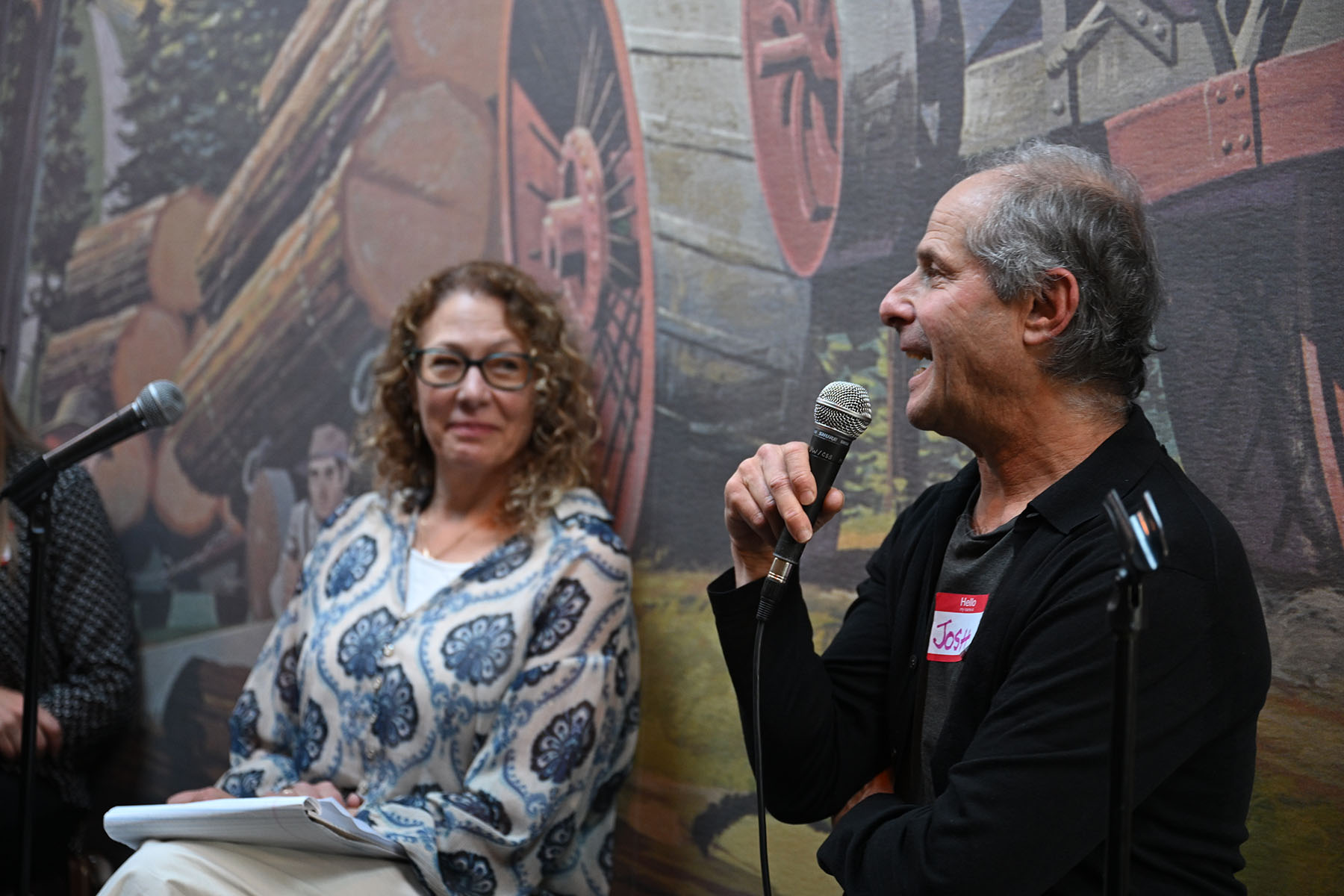
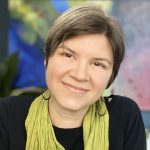
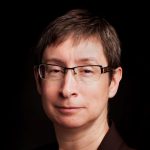
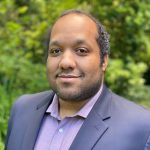
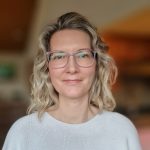
Lisa Hoffman, left, anthropologist and professor in the School of Urban Studies at UW Tacoma, and Josh Tenenberg, right, computer scientist and professor in the School of Engineering & Technology at UW Tacoma. Credit: Matthew Weinstein.
What does it mean to be living with “high risk” for disease? This was the question that inspired an intimate public gathering at Peaks & Pints Taproom in Tacoma on May 18 for Society + Technology at UW’s latest After Hours event featuring anthropologist Lisa M. Hoffman of UW Tacoma’s Urban Studies program and computer scientist Josh D. Tenenberg of UW Tacoma’s School of Engineering & Technology.
Many research collaborations have serendipitous beginnings, and the conversation began with Hoffman and Tenenberg recounting how they’d been attending an STSS reading group led by Matthew Weinstein, a professor of education at UW Tacoma (and the photographer for this event), and realized they shared a connection to pancreatic cancer but had differing relationships to their own sense of identity in relation to risk.
Hoffman (pictured above, left) had been living under the shadow of being high risk for pancreatic cancer after losing both her mother and brother to the disease. While Tenenberg (right) described a different relationship to the same illness. Although his father also died of pancreatic cancer decades earlier, he had never understood himself as someone living with high risk.
When they realized they shared this connection, the scholars began collaborating, conducting cultural and data-driven analyses of risk categories over time.
During the event, they explained the outcomes of their work, such as the regimes of truth that have come to govern approaches to living with risk, alongside their own lived experiences.
Tenenberg revealed that he is reluctant to participate in disease surveillance himself.
“I typically don’t go to the doctor,” he said, adding that he would seek medical attention if he experienced symptoms or believed something was wrong.
His remarks drew laughter from the audience when he clarified that he was not opposed to risk management altogether.
“I’m at higher risk if I go on ladders–and I don’t get up on ladders,” he said. “I don’t go up on my roof.”
Meanwhile, Hoffman described her observations of the trust that vulnerable people are asked to place in medical expertise and predictive technologies. She compared Western medicine’s authority to an oracle or sage—a person in a white coat representing an institution that people may not fully understand but are expected to trust.
At the same time, she acknowledged her own participation in disease surveillance despite concerns about the broader forms of governance they enable. “I take the statin they prescribe,” she said.
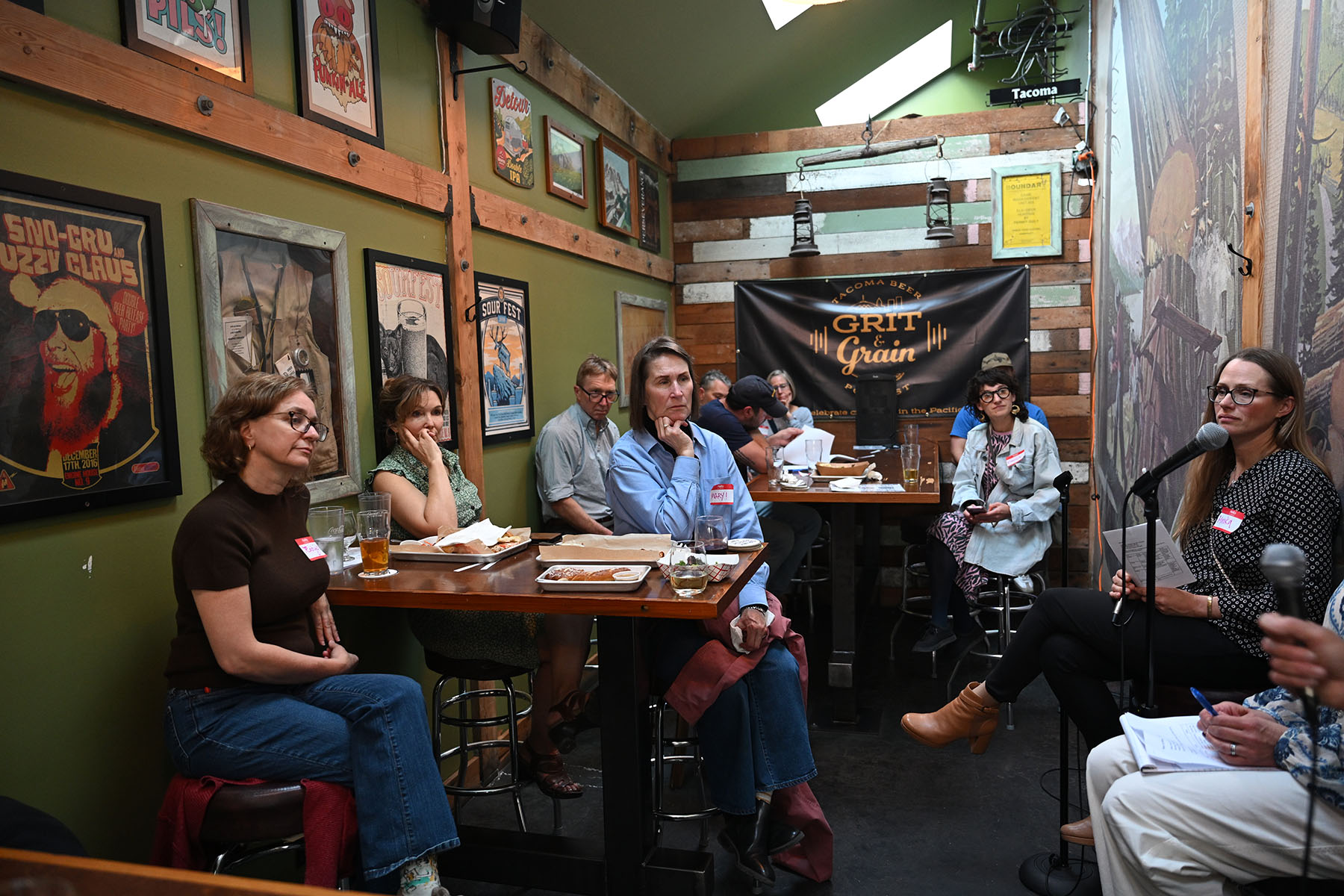
More than 25 people enjoyed the private room at Peaks & Pints for the conversation on May 18, 2026. Credit: Matthew Weinstein
Hoffman also noted there’s an expansion of interest among researchers and companies in identifying genetic risk in new populations–such as testing every infant– but noted that families may not understand the meaning of risk. There are ethical concerns about how such knowledge might shape the baby’s life, gesturing to the possibilities that risk categorization opens up, from discrimination to eugenics.
During the question-and-answer session, one audience member, a physician, discussed her elevated risk for strokes due to family history and high blood pressure. Another raised concerns about unequal access to surveillance programs and preventative treatments for people identified as high risk.
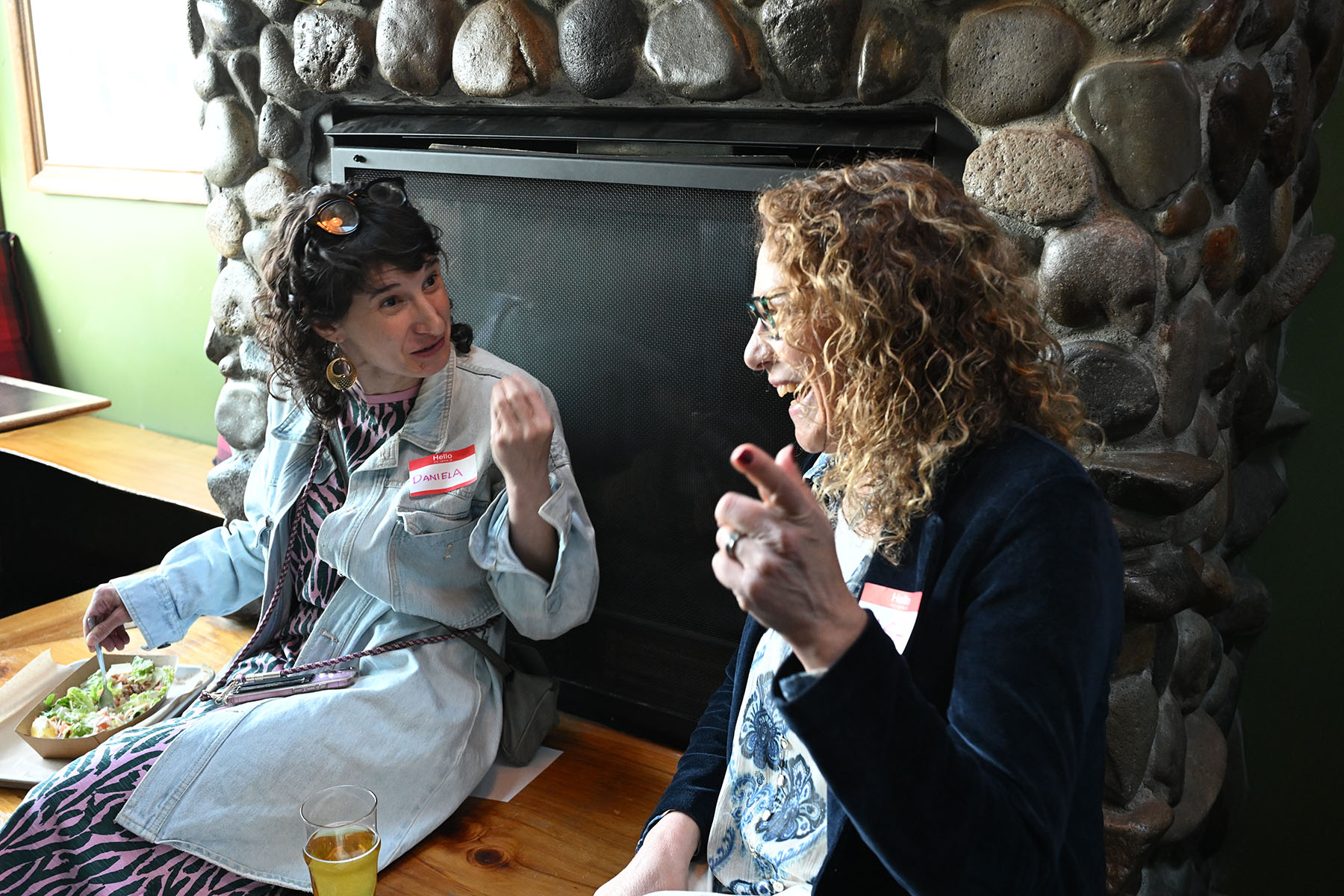
Lisa Hoffman (right) talks with Daniela Rosner (left), professor of Human Centered Design & Engineering and DXARTS at UW Seattle, who traveled to Tacoma for the After Hours event. Credit: Matthew Weinstein
Audience members came from across the Puget Sound region. The After Hours event was made possible thanks to support from the Tech Policy Lab at UW and the in-kind support of Peaks & Pints, which provided the venue space free of charge.
After Hours is a program of Society + Technology at UW, and this session was facilitated by Monika Sengul-Jones.
Society + Technology at UW is dedicated to advancing research on the social, societal, and justice dimensions of technology across the University of Washington’s campuses.
Check out Hoffman and Tenenberg’s upcoming, co-authored publication:
Hoffman, L., Tenenberg, J. (2026). Cancer Risk Assessment Scores: Personalized Risk and Mundane Genomics. In Mundane Genomics: DNA after the Hype. Argudo-Portal, V., Pavone, V., Turrini, M., Wahlberg, A. (Eds.). Preorder link: https://link.springer.com/book/9789819545490
About Lisa Hoffman
Lisa Hoffman is a Professor in the School of Urban Studies at UW Tacoma. An anthropologist, Hoffman’s current research focuses on Seattle’s biotech community, precision medicine, and the shape of contemporary practices of living in relation to genetic risk. Her work offers attunement to place, power, and subjectivity. Previously, Hoffman’s major projects included work on professionals and volunteers in contemporary China.
About Josh D. Tenenberg
Josh D. Tenenberg is a Professor in the Department of Engineering at UW Tacoma. His expertise is in what he calls the “borderlands” of technical and humanistic approaches. Trained in computer science, Tenenberg’s empirical research has been about computing and engineering education, software development, human-computer interaction, design research, semiotics, and technical communication. His publications include Narratives of Qualitative Research: Making Praxis Visible, published by Routledge (2024). He teaches human-oriented aspects of computing at the undergraduate and graduate levels.
Society + Technology at UW is pleased to host the next After Hours conversation in Tacoma, Living “At Risk” with anthropologist Lisa M. Hoffman (Urban Studies, UW Tacoma) and computer scientist Josh D. Tenenberg (Engineering, UW Tacoma) in conversation about the stakes, technologies, and stories of high risk.
What if you’re living with “high risk” for future disease? Maybe it is a genetically identified risk, maybe it is family history risk. What do you do with that knowledge—and who decides what disease risk means and how you should live?
Monday, May 18, 2026 | 5:30 PM Peaks & Pints Taproom (21+ only) 3816 N. 26th Street Tacoma, WA 98407
What does it mean to live with a “high” disease risk in our contemporary moment—and how does it differ from earlier formations of “risk factors”?
How genetic risk scores are shaping screening, reproduction, and everyday decision-making
Who interprets risk data? What is at stake in continuous recalculations of risk with new technologies?
What happens when you resist or refuse?
Faculty, students, community members, and curious citizens are welcome. Free and open to the public. No registration required.
About Lisa Hoffman
Lisa Hoffman is a Professor in the School of Urban Studies at UW Tacoma. An anthropologist, Hoffman’s current research focuses on Seattle’s biotech community, precision medicine, and the shape of contemporary practices of living in relation to genetic risk. Her work offers attunement to place, power, and subjectivity. Previously, Hoffman’s major projects included work on professionals and volunteers in contemporary China.
About Josh D. Tenenberg
Josh D. Tenenberg is a Professor in the Department of Engineering at UW Tacoma. His expertise is in what he calls the “borderlands” of technical and humanistic approaches. Trained in computer science, Tenenberg’s empirical research has been about computing and engineering education, software development, human-computer interaction, design research, semiotics, and technical communication. His publications include Narratives of Qualitative Research: Making Praxis Visible, published by Routledge (2024). He teaches human-oriented aspects of computing at the undergraduate and graduate levels.
Thursday, May 14, 2026 | 5:00–7:00 PM 233 Sieg Building | Design Lab | UW Seattle
Join us for the annual Science, Technology, and Society Studies (STSS) Graduate Presentations and Reception, the first in-person event in a long while, celebrating the work of this year’s graduating certificate students: Dan Tibbles, Cameron Musard, Rin Huang, Rachael Diamond, and Erica Bigelow.
The STSS Graduate Certificate Program at the UW introduces students to the interdisciplinary field of science, technology, and society through coursework, mentorship, and independent research. Through their studies, they develop specialized portfolios that reflect their intellectual interests and contributions. This capstone experience is an opportunity to hear from students about their research, to engage with our STSS faculty and affiliates community, and to celebrate the culmination of their work and our year together. A reception will follow the presentations.
Directions and parking: https://www.hcde.washington.edu/directions
Student Presenters
Dan Tibbles Bioethics and Humanities
Advisor: Sara Goering (Philosophy) Presentation:Zooming Out
Dan Tibbles is a graduate student in Bioethics & Humanities, Genetic Epidemiology, and Education, Equity, & Society at the University of Washington. His work sits at the intersection of bioethics, public health genetics, and science and technology studies, focusing on how institutional incentives, interpretive practices, and data infrastructures shape what biotechnologies become clinically available, how they are communicated, and whom they serve. Prior to academia, he spent two decades in the tabletop game industry as a designer, manager, and business owner, a background that informs his systems-oriented approach to ethics, infrastructure, and human choice.
Rachael Diamond Communication
Advisor: Carole Lee (Philosophy) Presentation:Science/Society Communication in a Warming World
Rachael Diamond is a second-year graduate student in the Department of Communication whose master’s thesis research examines climate science communication and the rhetoric of environmental activists. After earning her MA, she will start her PhD in philosophy at Northwestern University in the fall. Before coming to UW, she was a political organizer advocating for pro-climate policies and candidates, and studied philosophy at Scripps College.
Erica Bigelow Philosophy
Advisor: Amanda Friz (Communication) Presentation:Meeting and Making the Tech-Built World
Erica Bigelow is a PhD candidate in the Department of Philosophy whose dissertation studies the nature and extent of our moral obligations toward others’ emotions. She is a scholar of critical disability studies and is particularly interested in how online discourse shapes and interprets such obligations, and in rethinking feminist moral theories to meet the present moment.
Cameron Musard is a second-year Master of Urban Planning student within the College of Built Environments, whose STSS portfolio explores the role of craft and making in the production and authorization of knowledge within built environment schools. He is a scholar of pragmatist/linguistic philosophy. His research interests include classical sociological topics such as analytical comparison between “traditional” and “modern” societies; and in philosophy of science, analytical comparison between naturalism and positivist epistemic venues.
Rin Huang is a graduate student in Cinema and Media Studies, focusing on transportation and its media representations. They wonder how technologies, especially those related with aviation and aeromobility, create a dispersed imagination of globalization and modernization since 1920s.
Advisors
Sara Goering Philosophy (UW Seattle)
Sara Goering is Professor of Philosophy and the Program on Ethics, and has affiliations with the Department of Bioethics and Humanities, and the Disability Studies Program. In addition, she currently leads the ethics thrust at the UW Center for Neurotechnology. She teaches courses in bioethics, ethics, philosophy of disability, feminist philosophy, and philosophy of medicine. She also spends time discussing philosophy with children in the Seattle public schools, through her role as the Program Director for the UW Center for Philosophy of Children.
Carole J. Lee Philosophy (UW Seattle)
Carole J. Lee is Professor in the Department of Philosophy at the University of Washington, an Adjunct Professor at the Information School (iSchool), and Affiliate Faculty at the Center for an Informed Public, Center for Statistics and the Social Sciences, eScience Institute, Center for Studies in Demography and Ecology, and the Society + Technology Program. She studies the social structure of science from both normative and descriptive perspectives.
Amanda Friz Communication (UW Seattle)
Dr. Friz is Assistant Professor of Rhetoric of Health and Medicine in the Department of Communication and an Associate Director of the Center for Communication, Difference, and Equity and its Heal Equity Action Lab. She is currently writing her first book, A New Materialist Critique for a Radical Politics of Pleasure, which proposes shifting the locus of feminist pleasure activism from liberal subjectivity toward a radically inclusive plurality as the basis for more equitable sexual relationships.
Daniela Rosner Human Centered Design & Engineering, DXARTS (UW Seattle)
Daniela Rosner is Professor of Digital Arts and Experimental Media (DXArts) and Human Centered Design and Engineering (HCDE) at the University of Washington, where she serves as Associate Chair of External Affairs. She holds adjunct appointments in the Department of Gender, Women, and Sexuality Studies (GWSS) and the Allen School for Computer Science and Engineering (CSE). She also serves as an associate member of the Einstein Center for Digital Futures in Berlin, Germany.
David Ribes Human Centered Design & Engineering (UW Seattle)
David Ribes is a Professor in the Department of Human Centered Design & Engineering at the University of Washington. Dr. Ribes’s research focuses on the sociotechnical facets of eScience and how research infrastructures can support scientific investigations across changes in technology, policy and social organization.
S+T proudly launches an online Salon Series this January 2025 as one of the community programs designed to strengthen the emerging cross-campus, cross-disciplinary network.
Each Salon is a one-hour and fifteen-minute conversation between three-five Affiliates from the S+T network, with a moderator. The purpose is to recognize and honor live, arranged encounters as a meeting of the minds, to give greater visibility to the S+T network, and to cultivate intellectual conditions for deeper collaborations.
[1] S+T Salon | Online | Genetic Technologies, Technologies of Genetics
Perspectives on technologies of genetics, including biostatistics, risk analysis, and more, from anthropological, cultural, and philosophical schools of thought.
Presenters:Christian Anderson (IAS, UW Bothell, Shannon Cram (IAS, UW Bothell), Malia Fullerton (Dept. of Bioethics & Humanities, School of Medicine), Lisa Hoffman (Urban Studies, UW Tacoma), Sarah Nelson (Genetic Analysis Center, Dept. of Biostatistics, UW Seattle)
[2] S+T Salon | Online | Bioethics and Human Flourishing
Ethical, social, cultural, geographical, and critical perspectives on research and applications of genetics, neurotechnologies, precision medicine, and more.
Presenters: From the Department of Bioethics and Humanities at the School of Medicine: Tim Brown, Amy Hinterberger, Sue Trinidad; and from the UW Tacoma School of Interdisciplinary Arts and Sciences: Ilā Ravichandran
Speaker Biographies
[1] Salon | Jan. 13, 2025 | Genetic Technologies, Technologies of Genetics
Christian Anderson is an Associate Professor at UW Bothell and an interdisciplinary scholar working at the intersections of human geography, urban studies, cultural studies, science and technology studies, and critical social thought. In his previous work, his primary mode has been ethnographic. He is increasingly interested in practicing place-based collaborative methods—including oral histories, mapping and geo-visual techniques, and other qualitative approaches—within various contexts and structures of community-embedded collective study and knowledge production.
Across all of his work, Anderson’s abiding aim is to understand how ordinary people’s everyday lives, routine practices, relations, and taken-for-granted or “common sense” conceptions of the world interconnect with broader formations of culture, power, social reproduction, and political economy. Additionally, he seeks to experiment with conscientious place-based processes and protocols through which alternative conceptions, practices, relations, formations, and futures might emerge.
Shannon Cram is an Associate Professor at UW Bothell and an interdisciplinary scholar working at the intersections of geography, anthropology, science and technology studies, and the environmental humanities. Her research explores what it means to reckon with an unevenly contaminated environment and how managing exposure shapes the very definitions of health and hazard in the United States. Her work investigates the embodied politics of waste and wasting, with particular attention to the co-production of science and social life. She analyzes how frames such as risk, reason, pollution, and protection recognize (and fail to recognize) environmental impacts. In examining how such forms of recognition have come to be, she also asks how they might be reimagined. This concern with how power circulates in and through situated histories of toxicity is central to her scholarship.
Malia Fullerton (Dept. of Bioethics & Humanities, School of Medicine)
Stephanie Malia Fullerton, DPhil, is Professor in the Department of Bioethics and Humanities at the University of Washington School of Medicine. She is also an Adjunct Professor in the UW Departments of Epidemiology, Genome Sciences, and Medicine (Medical Genetics), as well as an affiliate investigator with the Public Health Sciences division of the Fred Hutchinson Cancer Research Center. She received a PhD in Human Population Genetics from the University of Oxford and later re-trained in Ethical, Legal, and Social Implications (ELSI) research with a fellowship from the NIH National Human Genome Research Institute. She currently serves as Director of Research for the department. Fullerton’s work focuses on the ethical and social implications of genomic research and its equitable and safe translation for clinical and public health benefit. She co-leads (with Sarah Nelson) ELSI research focused on data governance in the context of emerging cloud-based biomedical data storage and analysis platforms (R21 HG011501). She serves as a co-I with the Polygenic Risk Methods in Diverse Populations (PRIMED) Consortium coordinating center (U01 HG011697), and previously served as the ELSI PI for the Clinical Sequencing Evidence-Generating Research (CSER) coordinating center (U24 HG007307). She has prior experience with qualitative research, particularly in association with the UW Electronic Medical Records and Genomics (eMERGE) Network, now in its fourth phase (U01 HG008657). She has also contributed expertise to the Ethics of Inclusion project (R01 HG010330) as well as to a project focused on community engagement surrounding APOL1 genetic testing in African Americans (R01 HG007879).
Lisa M. Hoffman (she/her/hers) is Professor in the School of Urban Studies at UW Tacoma. Trained in cultural anthropology, her scholarship has focused on questions of power, governing, and social change, with a particular interest in subjectivity and its intersections with spatiality. Geographically, the majority of her work has been located in urban China, with an extension of these organizing questions into other realms in the United States, such as science and technology studies, ethnic identity, and homelessness. Her analytical approach has been strongly influenced by the work of Michel Foucault – especially in terms of how she thinks about power, sources of authority, and subject formation processes. Her current research project – “Being ‘high risk’ for cancer: personal genetics, the present self and managing future disease” – engages science and technology studies and considers how genetics and precision health are shaping subjectivity and contemporary practices of living. It is concerned with what is at stake when cancer risk assessment scores and other more personalized prevention practices (e.g., genetic testing) become increasingly commonplace, expanding the number of people identified as at-risk. The project includes ethnographic fieldwork with individuals identified as high risk for cancer, clinicians doing early detection work, and experts (e.g., in nutrigenomics, genetic counseling) who help people manage their present lives for a potential future illness. It also includes research on institutional alliances that lead to the production of knowledge about cancer prevention as well as computational practices producing health risk scores.
Sarah Nelson(Genetic Analysis Center, Dept. of Biostatistics, UW Seattle)
Sarah Nelson (she/her/hers) is an interdisciplinary researcher interested in the ethical and social implications of genomics in research, clinical care, and everyday life. She is a Senior Research Scientist and Project Manager at the Genetic Analysis Center within the University of Washington (UW) Department of Biostatistics. She holds a PhD and MPH in Public Health Genetics from UW, and the graduate certificate in Science, Technology, and Society Studies. Her graduate studies in Public Health Genetics have provided her with uniquely interdisciplinary training in the ethical, legal, and social implications (ELSI) of genetic research and its translation into clinical and consumer settings.
[2] Salon | Jan. 14, 2025 | Bioethics and Human Flourishing
Tim Brown (Department of Bioethics and Humanities, School of Medicine)
Tim Brown joined the Department of Bioethics and Humanities in the School of Medicine in July 2021 as an Assistant Professor. He earned his Ph.D. in Philosophy from the University of Washington, after earning a B.A. in Philosophy from the University of California, Santa Cruz. He is also a founding member of and long-term contributor to the Neuroethics Thrust within the Center for Neurotechnology at UW. He also leads diversity, equity, and inclusion efforts with the International Neuroethics Society. He works at the intersection of biomedical ethics, philosophy of technology, (black/latinx/queer) feminist thought, and aesthetics. His research explores the potential impact of neurotechnologies—systems that record and stimulate the nervous system—on end users’ sense of agency and embodiment. His work also interrogates neurotechnologies for their potential to exacerbate or create social inequities, in order to establish best practices for engineers. Finally, Dr. Brown’s approach to research is interdisciplinary, embedded, and relies on mixed methods; his work on interdisciplinary is aimed at encouraging deeper collaborations between humanists and engineers in the future.
Amy Hinterberger (Department of Bioethics and Humanities, School of Medicine)
Amy Hinterberger is Associate Professor and Chair of the Department of Bioethics and Humanities in the School of Medicine at the University of Washington. Prior to joining University of Washington in 2024, she was Associate Professor in the Department of Global Health and Social Medicine at King’s College London, UK. She has also held positions at the University of Warwick (2013 – 2017), Harvard University (2014), University of Oxford (2011 – 2013) and University of London (2010 – 2011). A sociologist by training (PhD, LSE, 2010), her research addresses the ethical and political dynamics of biomedicine and biotechnology. Amy currently leads a team of researchers exploring the ethics and politics of stem cell models for human disease and development through a Wellcome Trust Investigator Award in the Social Sciences and Humanities called ‘Biomedical Research and the Politics of the Human’ ($753,351: 2020 – 2025): politicsofthehuman.org. Using qualitative empirical and ethnographic research methods, the project is designed as a social and ethical exploration into the changing relationship between humans, animals and biomedicine. Her research interests span multiple areas of innovation and technology, focusing particularly on cell-based technologies and genomics. Exploring the relationship between inequality and the social implications arising from emerging technologies is a key aspect of her scholarship. Additionally, she is interested in the intersections between sociology and bioethics, particularly in exploring the institutional governance and regulation of both humans and animals in biomedical research.
Sue Trinidad (Department of Bioethics and Humanities, School of Medicine)
Sue Trinidad is an Assistant Professor in the Department of Bioethics and Humanities, having worked as a Research Scientist in the department from 2005-2022. She is the co-Principal Investigator of an NIAID-funded grant, Alaska Native People Advancing Vaccine Uptake, which will use peer-to-peer outreach, education, and motivational interviewing to increase COVID-19 vaccination among Alaska Native and American Indian people in Alaska. She has conducted empirical bioethics work concerning the ethical, legal, and social implications (ELSI) of genomic research and precision medicine with several large national consortia including the eMERGE Network, the Northwest-Alaska Pharmacogenomics Research Network, the CSER Consortium, and two Centers of Excellence in ELSI Research, the Center for Genomics and Healthcare Equality (CGHE) at UW and the Center for the Ethics of Indigenous Genomic Research (CEIGR) at the University of Oklahoma. Her research interests include the dynamics and ethics of equitable collaboration in health research; patient-centered communication and medical decision-making; the ethical and social implications of genomic research, wide data-sharing, and broad consent; moral and dispositional development; and qualitative methods development. As a white settler engaged in research with Alaska Native and American Indian communities, Trinidad works to develop participatory, strengths-based approaches to health research that respect Tribal sovereignty and the right of Indigenous peoples to self-determination. She served on the UW Institutional Review Board from 2009-2014. Trinidad holds a PhD in educational psychology (Learning Sciences & Human Development) from UW, an MA from the Interdisciplinary Program in Health and Humanities at Michigan State University, and a BA in English from the College of William and Mary. She came to UW from an executive-level position in product development for companies specializing in telephone triage and disease management counseling.
Ilā Ravichandran (School of Interdisciplinary Arts and Sciences at UW Tacoma)
Ilā Ravichandran is an assistant professor of legal studies at the University of Washington, Tacoma. She is an interdisciplinary sociologist who works at the intersections of feminist studies, critical carceral studies, legal studies, Black studies, and science & technology studies. Her research focuses on the intersections of science and law and engages with the global policing apparatus. To this end, her current research is a multi-method inquiry that analyzes the expanded use of genetics and genomics as a tool of racialized policing, with particular attention to the assemblages that converge to promote such an apparatus. This research has been funded by the National Science Foundation and the Social Science Research Network. She is the co-author of Imperial Policing: Weaponized Data in Carceral Chicago (University of Minnesota Press). She is also a visual artist and urban farmer, orienting her life’s work towards liberatory and imaginative futures.