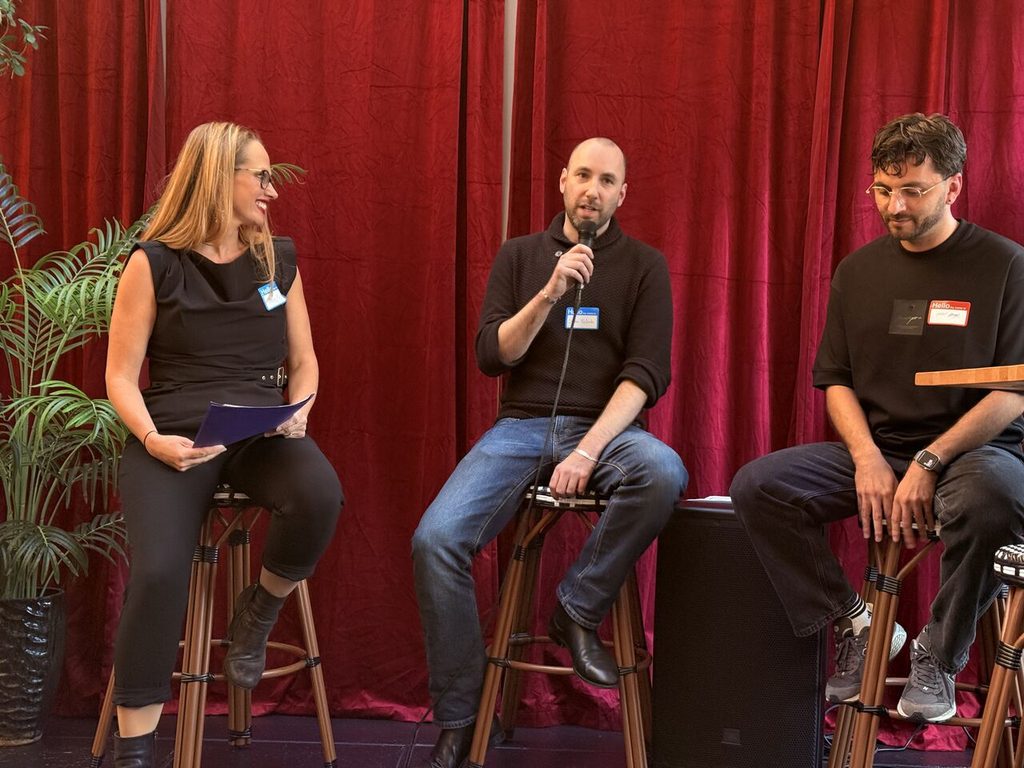
On October 5, 2026, Society + Technology at UW welcomed Mert Can Bayar (IAS, UW Bothell) and Stephen Prochaska (Information, UW Seattle), researchers with the UW Center for an Informed Public (CIP), for an After Hours conversation at The Lonely Siren in Pike Place Market, moderated by Monika Sengul-Jones.
The discussion began with definitions—the differences between disinformation, propaganda, and rumors—before turning to their work on the latter, which involves tracking startling tropes—recurring stories—across the media ecosystem, including those circulated by state actors, in relation to the upcoming midterm elections: noncitizens voting, for instance, or voting machine “glitches.”
Tropes and rumors can sow distrust among people and institutions. (Attendees were also offered copies of CIP’s “Rigged Election Bingo” game, which can be used to identify recurring tropes.)
Bayar and Prochaska also described the emotional toll of tracking rumors on their team. “We have a staff therapist,” Prochaska said.
Bayar emphasized that conspiratorial thinking is not partisan—everyone is susceptible to rumors, and no one should feel compelled to blindly trust government institutions. Historical context matters, too. In the Global South, he said, conspiracies aren’t paranoia; they’re history.
“When democracy grows thin, conspiracies grow thick,” Bayar said.
Learn more about the Center for an Informed Public; subscribe to the Election Rumor Rundown.
Special thanks to The Lonely Siren, the UW Information School, and the Tech Policy Lab for their ongoing partnership and support.