Skip to content

UW Social at 4S will celebrate UW’s contributions to the STS field

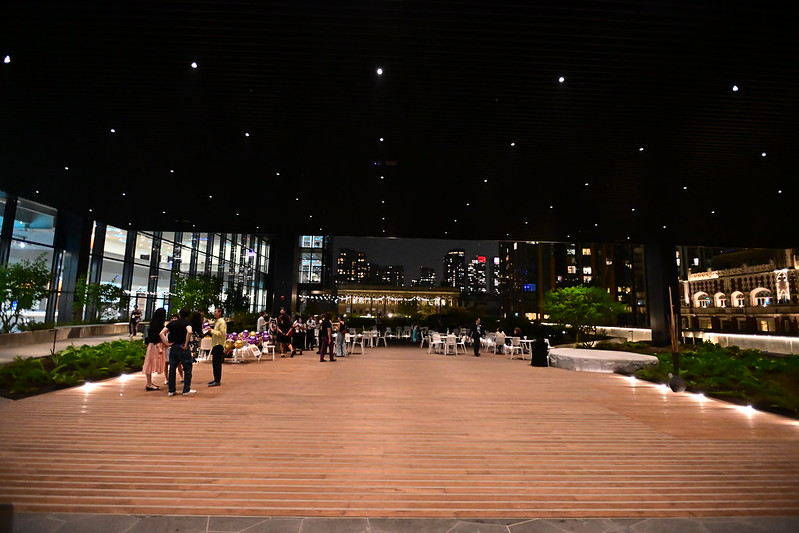
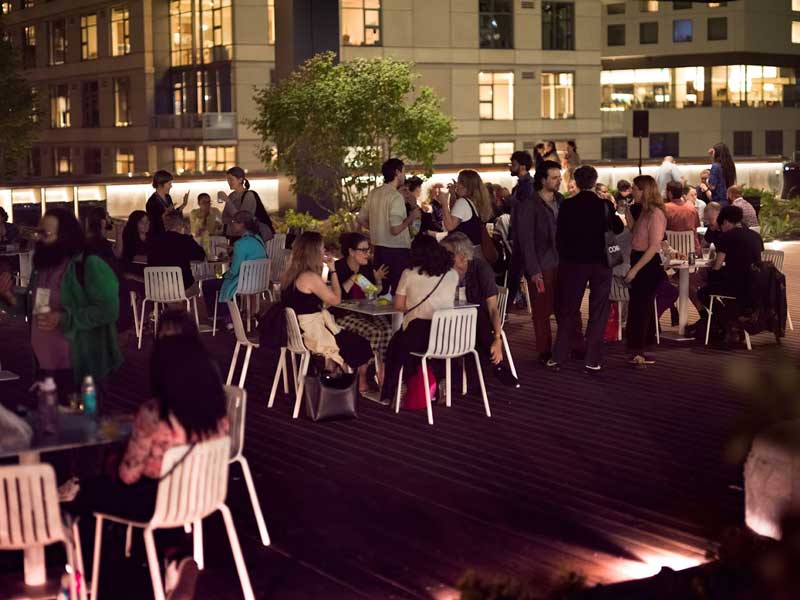
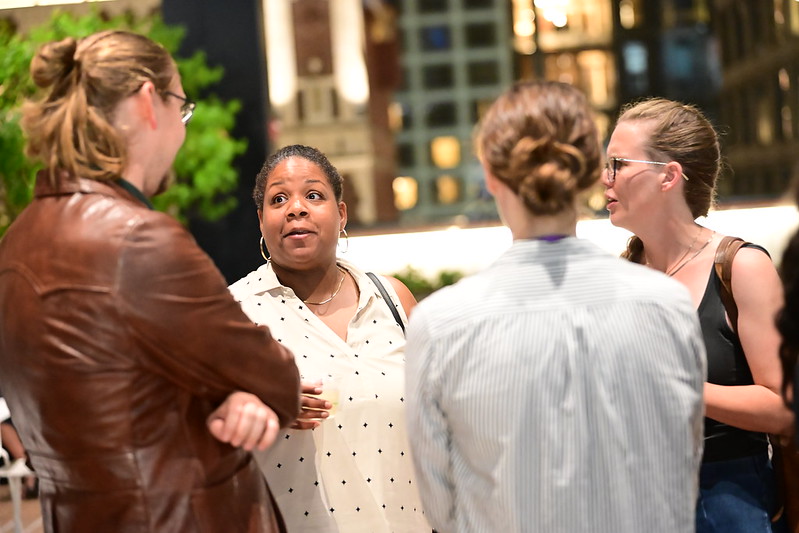
On Friday, Sept. 5, the UW Social at 4S will be held in the Garden Terrace at the Summit, a pollinator garden. Photo credit: Garden Terrace (Night), Summit (2025)

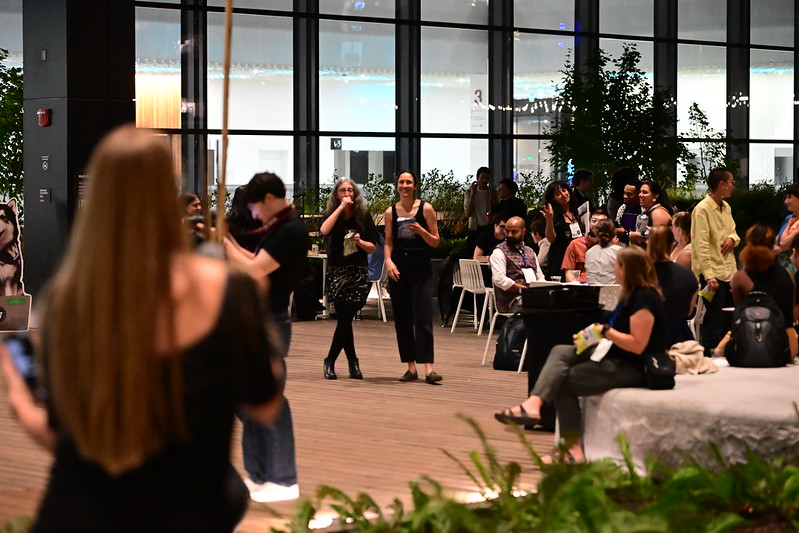
SEATTLE — More than 100 University of Washington faculty and students will present their research this September at Reverberations, the 50th Annual Meeting of the Society for Social Studies of Science (4S), a leading interdisciplinary conference for scholars engaged in social studies of science, technology, and medicine (a field often referred to as STS).

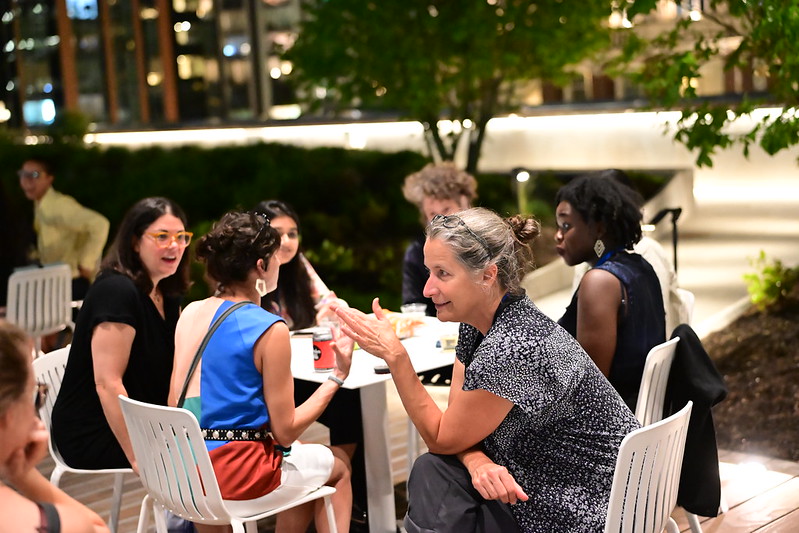
To mark the occasion, Society + Technology at UW is inviting all 4S attendees to register to attend the UW Social, to celebrate UW’s contributions to the field of STS and to foster connections and stoke curiosity.

UW Social

The party will be on Friday, September 5, from 8:30 to 10:00 p.m. on the Garden Terrace (third floor) of the Summit at the Seattle Convention Center. Reverberations will take place at the Sheraton Grand Hotel and the Summit at the Seattle Convention Center from September 3-6, 2025. 

“This is an exciting opportunity to acknowledge the tremendous and ongoing work in this interdisciplinary field happening at UW across all three campuses,” said Monika Sengul-Jones, co-host of the UW Social with Daniela Rosner, a professor in Human Centered Design and Engineering and Co-chair of Reverberations.

“And it’s in a pollinator garden, which is a gesture to our intention with the party: to be a space to pollinate and to strengthen the assemblages that animate STS as a field of creation and critique.”

Who can attend?

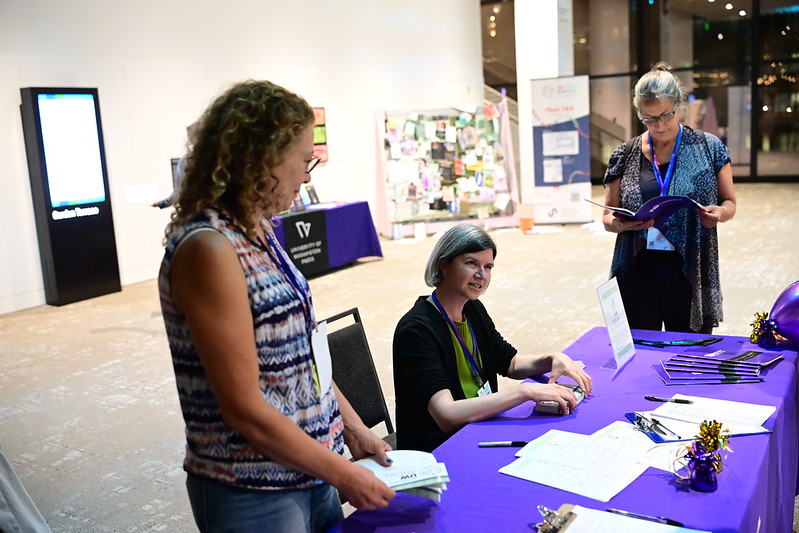
The UW Social is free for registered 4S attendees, though separate registration for the party is required. Register online and pick up your paper UW Social ticket at the registration desk in the foyer of the Sheraton Hotel starting on Thursday at 1:00 p.m.

The first 150 guests to register and collect their paper ticket will receive a complimentary drink sticker they can redeem at the party; additional refreshments will be available for purchase.

Co-sponsors of UW Social include: Society + Technology at UW, hosted by the Tech Policy LabUniversity of Washington Press4SScience, Technology & Society at UW Bothell, the Department of Philosophy, the Department of Cinema and Media Studies, the Science, Technology and Society Studies Graduate Certificate Program, the Department of Communication, CommLead, Human Centered Design and EngineeringDXARTS, and the Department of Bioethics and Humanities at UW Medicine.

Attending 4S? Register for the UW Social

Last S+T at UW Mixer of the academic year at UW Bothell’s historic Truly House

As the quarter winds down, Society + Technology at UW invites faculty and affiliates to our final mixer of the academic year—an informal gathering at the historic Truly House at UW Bothell.

Roses, Thorns, Buds | Mixer
Thursday, June 12, 2025
3:00–4:30 PM
The Truly House, UW Bothell
Add the event to your calendar 

Enjoy snacks in an Adirondack chair in the rose garden or sit in the shade on the porch of the 100-year-old ranch house near the West Parking Garage. Join us to connect and reflect on the values, technologies, and ideas shaping our work now and going forward. The roses, the thorns, the buds.

Hosted by: Monika Sengul-Jones (Society + Technology at UW/STSS) and Kim Swenson (Center for Teaching and Learning, UW Bothell)

Questions? Email Monika at mmjones@uw.edu

Learn more about the Truly House

‘Technology for the People’ emphasized how technology can bridge–not break–social relationships

Crossposting the UW Communication’s Center for Journalism, Media, and Democracy (CJMD)’s article about “Technology for the People,” a Society + Technology at UW (S+T) salon co-hosted with CJMD.

From left to right: Salon co-host and co-sponsor Monika Sengul-Jones (S+T, Tech Policy Lab), Esther Jang (Computer Science, UW Seattle), Divya C. McMillin (Global Media Studies, UW Tacoma), co-host and co-sponsor Adrienne Russell  (Communication, CJMD), Carmen Gonzalez (Communication, UW Seattle), and Dharma Dailey (Computing & Software Systems, UW Bothell).

On April 12, 2025, Society + Technology at UW co-hosted ‘Technology for the People,’ a salon that brought together prominent voices from all three UW campuses in the technology, media, and communication fields to discuss efforts to promote digital equity and information access in the Puget Sound region.

The event featured speakers across multiple disciplines: Dharma Dailey (Computing & Software Systems, UW Bothell), Carmen Gonzalez (Communication, UW Seattle), Esther Jang (Computer Science, UW Seattle), and Divya C. McMillin (Global Media Studies, UW Tacoma). The salon was co-hosted and co-sponsored with CJMD and the Tech Policy Lab.

Salon co-hosts Monika Sengul-Jones (Director of Strategy & Operations, S+T) and Adrienne Russell (co-director, CJMD) emphasized the importance of the salons as creating a space for cross-disciplinary connection.

“This was a fantastic conversation that really showcased the deeply important and engaged work on how digital technologies are developed and used [that] UW researchers are doing across campuses and disciplines,” Russell said.

“The impulse behind this, the reason to host it, is because the biggest challenges of our time–such as how to grapple with inequalities and the role of technologies and media ownership–are best addressed through cross-disciplinary conversations,” Sengul-Jones added.

Salons are part of Society + Technology at UW’s community programming, which aims to explore a variety of issues and perspectives on emerging technologies. Salons are presented as intellectual discussions to cultivate meaningful collaborations among S+T affiliates and community members.

“This salon was proof of concept for this format, and is one of several Society + Technology at UW community programs that I’m leading to foster conversation,” said Sengul-Jones. “What made this salon a success was both cross-disciplinarity and intergenerational form. Everyone had slightly different disciplinary homes and methods for asking similar questions.”

Part of that success was the audience’s enthusiastic participation in the discussion. The salon hosted a diverse audience of over 100 registrants–from graduate students and faculty, to government workers, and more.

“Many in the audience were curious, concerned citizens coming to gain insight from our university,” Sengul-Jones said. “I see the salon as a service to our public.” It was an event, as the salon’s title suggests, “for the people.”

“It’s easy to forget in this current moment that technologies are made by people and they could be made and used in ways that support rather than undermine our connections to one another,” Russell said. “It is particularly important at this current political moment–when the tech industry is directly implicated in attacks on democracy–that we open up space to talk about not just what is happening, but also about how we might create technologies and tech systems that support rather than break communities and publics.”

Tech Policy Lab’s Distinguished Lecture emphasizes policies can offset AI’s agnotology

On Thursday, April 3, 2025, the UW Tech Policy Lab, which hosts Society + Technology at UW, brought Dr. Alondra Nelson to campus for the annual Distinguished Lecture, drawing a crowd of over 350 to Kane Hall in Seattle, Washington.

Nelson, the former Acting Director of the White House Office of Science and Technology Policy, focused her remarks on “algorithmic agnotology,” which is the strategic manufacture of ignorance at scale. She identified how artificial intelligence technologies, when administered through large corporations, follow the pattern of other examples of agnotology, namely the tobacco and fossil fuel industries’ efforts to sow doubt and unknowing among the population.

Nelson suggested that companies create knowledge asymmetries that reinforce their power while evading accountability. Deliberate opacity has profound implications for democratic governance and digital rights, she said.

She urged the audience to design policies that confront the systemic nature of doubt, rather than accepting the unknown, and as inevitable. 

Over a dozen audience members lined up to ask questions after the lecture.

“I’m especially interested in how we can […] actively redistribute power and understanding to users,” said Cherry Roy, a UW graduate student pursuing a Master’s of Science in Technology Innovation, who attended the lecture and found the parallels between Big Pharma and AI thought-provoking.

The lecture continued to spark conversations in classes and labs afterwards.

“I have heard so many students and other faculty glow about the talk,” said Tech Policy Lab Co-Director Tadayoshi Kohno. “Several students have now added ‘agnotology’ to their active vocabulary during project meetings.”

Vice Provost Mari Ostendorf opened the event with remarks about the importance of interdisciplinarity, and Kohno introduced Nelson, whose career spans academia and public service. Presently, Nelson is the Harold F. Linder Professor at the Institute for Advanced Study, where she leads the Science, Technology, and Social Values Lab. In 2023, she was named to the inaugural TIME100 list of the most influential people in AI and recognized by Nature as one of the “Ten People Who Shaped Science.”

This article is cross-posted with the Tech Policy Lab.