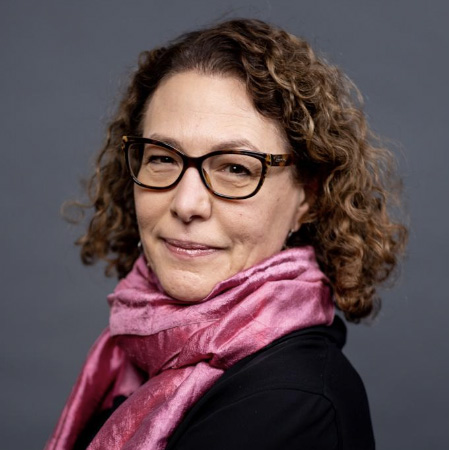
Save the date for January 28, 2027, which will be a public lecture at Seattle’s Town Hall by Cristina Visperas, the Mary Ann and John D. Mangels Endowed Lecturer and guest of the University of Washington Graduate School. Hosted by Society + Technology at UW, the Science, Technology, and Society Studies (STSS) Graduate Certificate Program, and the Department of Communication, this cross-campus event is presented in partnership with American Ethnic Studies, Geography, STS at UW Bothell, and Legal Studies at UW Tacoma.
Additional details, including her lecture title and campus visit details, will be announced this fall.
Every year, the UW Office of Public Lectures accepts nominations for the series. In January, Visperas was nominated by Society + Technology at UW faculty leader and STSS Director Leah Ceccarelli (Communication, UW Seattle) and Director of Strategy & Operations Monika Sengul-Jones, with endorsements from Erin McElroy (Geography, UW Seattle), Linh Thuy Nguyễn (American Ethnic Studies, UW Seattle), and Ilā Ravichandran (Legal Studies, UW Tacoma), and she was selected by the Office of Public Lectures for a 2027 visit.
Visperas is Associate Professor of Communication at the University of Southern California’s Annenberg School for Communication and Journalism. Visperas researches the cultural politics of science and medicine, with a focus on race and state/state-sanctioned violence. Drawing on her science background, she examines how the work of experts can reproduce social hierarchies and, conversely, how they can be mobilized for the ends of justice and social good. Her book, Skin Theory: Visual Culture and the Postwar Prison Laboratory (NYU Press), is an abolitionist study of postwar medical science experiments conducted in U.S. prisons and the emergence of modern American bioethics. Her next project analyzes the complicated relationship between emotion and scientific knowledge in the context of accelerating climate and public health catastrophes. She currently serves on the editorial board of Catalyst: Feminism, Theory, Technoscience and is affiliated with the Center on Science, Technology, and Public Life.
S+T at UW prioritizes programming that advances our mission of fostering cross-campus cross-disciplinary collaborations on the social, societial, and justice aspects of technology; nominating Visperas to visit our campus for a public lecture was suggested independently by several S+T at UW affiliates and thus helps us advance this mission.
This isn’t the first time that S+T at UW has supported an external visitor. Previously, faculty leader Ryan Calo (Law and Information, UW Seattle) and co-director of the Tech Policy Lab, along with Sengul-Jones, endorsed the nomination and supported the visit of Ly Xīnzhèn M. Zhǎngsūn Brown, who was hosted by Jennifer Mankoff (Computer Science, UW Seattle) and CREATE. Brown’s visit also provided the opportunity for a feminist technoscience meet-up with S+T at UW Campus Partner UW Press.
Other scholars that S+T at UW affiliates suggested nominating include cultural theorist and author Catherine Liu (suggested by Agnieszka Jeżyk, Slavic Studies, UW Seattle); Jenny Reardon, the Science and Justice Research Center, University of California, Santa Cruz (suggested by Sebastian Rubiano-Galvis); Beth Coleman, Information, University of Toronto (suggested by Temi Odumosu, Information, UW Seattle); Neda Atanasoski, Gender, Women’s, and Sexuality Studies, University of Maryland (suggested by Erin McElroy, Geography, UW Seattle, and Nassim Parvin, Information, UW Seattle); and danah boyd, Communication, Cornell University (suggested by Ryan Calo, Law and Information, UW Seattle).
Society + Technology at UW is pleased to invite the public to The Power of Public Research, our 2026 fall symposium highlighting University of Washington research and teaching at the intersection of society and technology.
Date: Friday, October 2, 2026 Time: 4:00 PM to 8:00 PM Location: Burke Museum, Cascade Room, 4303 Memorial Way NE, Seattle, WA, 98195
We believe public research and teaching have their greatest impact when they foster greater understanding and empathy. Society + Technology at UW’s symposium is designed with this mission in mind.
The program will feature opening remarks from Andrew Connelly, Associate Vice Provost for Data Science in the UW Office of Research and Professor of Astronomy, alongside threaded presentations, birds-of-a-feather discussions, and a fireside chat all featuring Society + Technology at UW affiliates.
This event is free and open to the public, but space is limited. Register today to receive updates about speakers and the full symposium program.
Schwabe is a Pacific Northwest law firm that offers an exceptional client experience based on a deep industry focus through the lens of our clients, colleagues, and communities. We provide a wide range of legal services through comprehensive, proactive advice, helping them achieve their objectives with strategy and care. With over 160 attorneys, Schwabe is one of the largest regional law firms in the Pacific Northwest, with offices in Portland, Bend, and Salem, Oregon; Seattle and Vancouver, Washington; Mountain View, California; and Anchorage, Alaska.
AI@UW envisions a future where AI at the University of Washington is a global model for innovation, diversity and societal impact — bridging disciplines and inspiring responsible applications of AI to address complex challenges. Our goal is to lead the way in advancing ethical, interdisciplinary AI research while fostering practical innovation to benefit society at large.
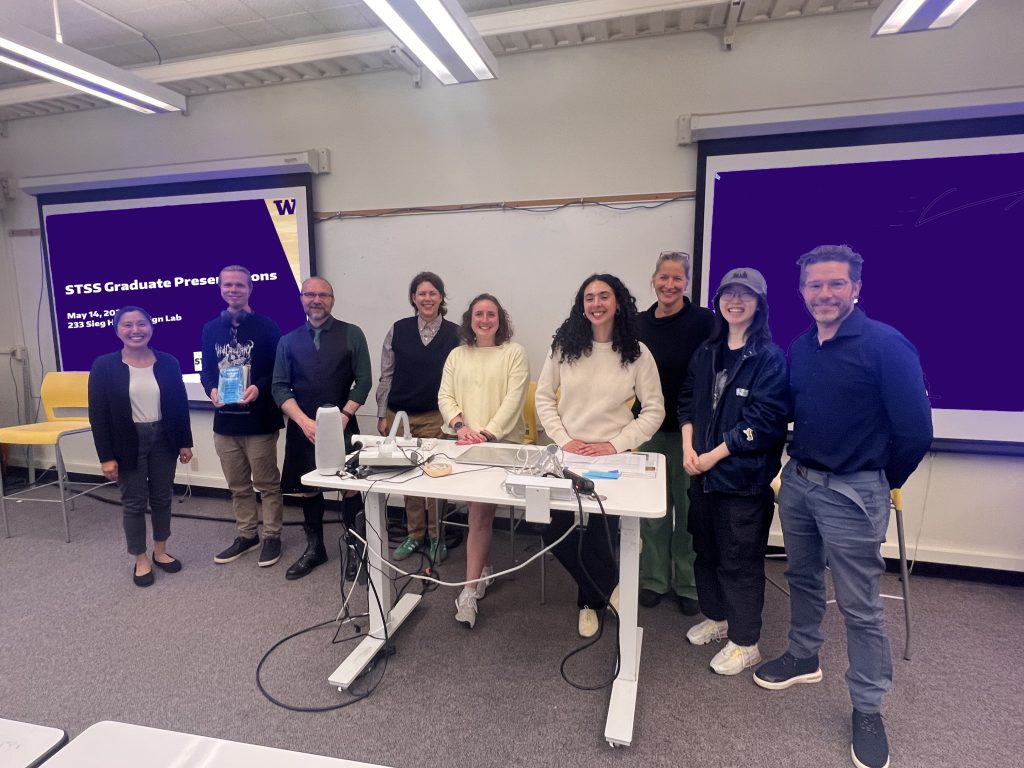
The 2026 STSS graduate certificate program presenters and their STSS advisors. Not pictured: Daniela Rosner.
Ontological choreography. Paradigm shifts. Boundary-work. Infrastructure as media. Value capture. Philosopher-in-residence.
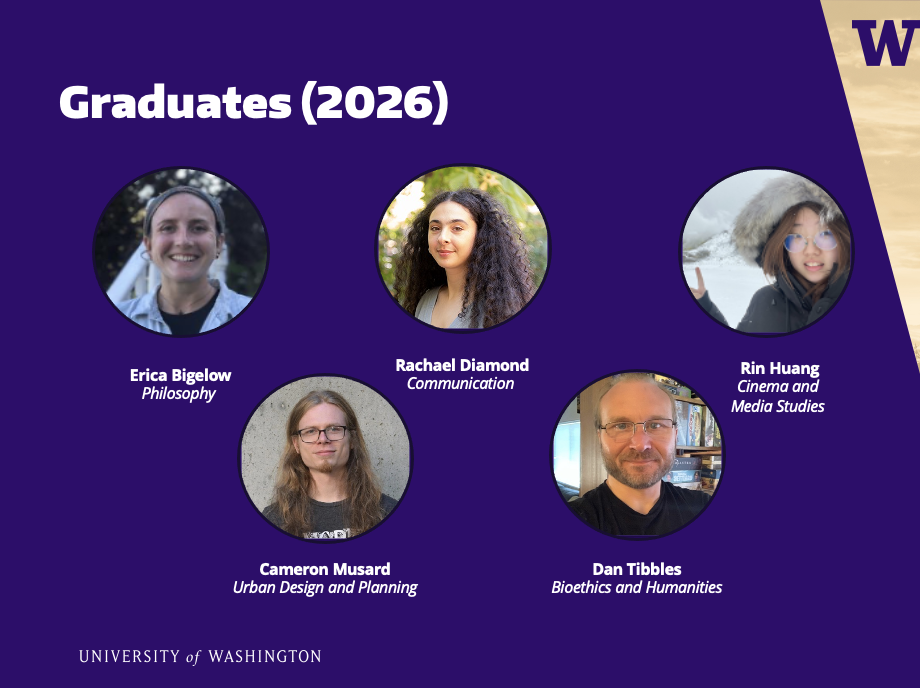
These are a few of the thematic keywords and phrases referenced during the portfolio presentations on May 14, 2026, by the five graduates of the Science, Technology, and Society Studies (STSS) graduate certificate program: Erica Bigelow, Rachael Diamond, Rin Huang, Cameron Musard, and Dan Tibbles.
The purpose of the STSS portfolio is for students to showcase how their research and teaching activities connect to the certificate’s learning objectives, which include learning to contextualize STEM fields in their social, historical, ethical, and policy contexts and building the critical reasoning skills needed to address complex problems at the intersection of science, technology, and society. The presentations are also a chance for graduates to connect their STSS learning to their own professional goals.
In the words of Tibbles, who is in the MA program in Bioethics and Humanities in the School of Medicine, the interdisciplinary ethos of STSS is shifting from seeking to understand to asking, “What systems made this look natural, responsible, funny, objective, or inevitable?” he said during his presentation, “Zooming Out.”
During his time in STSS, Tibbles brought his work in game design to bear on research about epigenetic gene editing.
Huang, an MA student in Cinema and Media Studies, described how STSS led her to consider space, technologies, and geography in her research on visions of the future in aviation.
Musard, who studied at Seattle Central’s Wood Technology Center and is now completing an MA in Urban Planning, described his engagement with STSS as demarcating tensions between carpentry and related professional categories such as architecture, construction labor, and woodworking through economic history, philosophy of education, and planning theory.
Bigelow, a doctoral candidate in philosophy, studied the ethics of large language models in clinical settings and broadened her reach as a philosopher-in-residence at Rainier Beach High School in Seattle.
Diamond, a communication scholar who will begin a PhD program at Northwestern in the fall, gestured to her work in climate activism as spurring her curiosity about STSS. Through her courses, she began to research the conditions under which people trust science.
The graduates come from five disciplines—philosophy, communication, cinema and media studies, urban design and planning, and bioethics and humanities—demonstrating the intellectual reach of STSS.
Outgoing steering committee member Matthew Weinstein (Education, UW Tacoma) and interim STSS director David Ribes (Human Centered Design and Engineering, UW Seattle) introduced and facilitated the event.
STSS became an official UW Graduate School certificate in 2015. This year’s cohort brings the total number of certificate graduates to 21.
Congratulations to the graduates and their STSS advisors!
Student Presenters
Dan Tibbles Bioethics and Humanities
Advisor: Sara Goering (Philosophy) Presentation:Zooming Out
Dan Tibbles is a graduate student in Bioethics & Humanities, Genetic Epidemiology, and Education, Equity, & Society at the University of Washington. His work sits at the intersection of bioethics, public health genetics, and science and technology studies, focusing on how institutional incentives, interpretive practices, and data infrastructures shape what biotechnologies become clinically available, how they are communicated, and whom they serve. Prior to academia, he spent two decades in the tabletop game industry as a designer, manager, and business owner, a background that informs his systems-oriented approach to ethics, infrastructure, and human choice.
Rachael Diamond Communication
Advisor: Carole Lee (Philosophy) Presentation:Science/Society Communication in a Warming World
Rachael Diamond is a second-year graduate student in the Department of Communication whose master’s thesis research examines climate science communication and the rhetoric of environmental activists. After earning her MA, she will start her PhD in philosophy at Northwestern University in the fall. Before coming to UW, she was a political organizer advocating for pro-climate policies and candidates, and studied philosophy at Scripps College.
Erica Bigelow Philosophy
Advisor: Amanda Friz (Communication) Presentation:Meeting and Making the Tech-Built World
Erica Bigelow is a PhD candidate in the Department of Philosophy whose dissertation studies the nature and extent of our moral obligations toward others’ emotions. She is a scholar of critical disability studies and is particularly interested in how online discourse shapes and interprets such obligations, and in rethinking feminist moral theories to meet the present moment.
Cameron Musard, who studied Cabinetmaking and Architectural Millwork at Seattle Central College’s Wood Technology Center and is completing an MA in Urban Design and Planning, described his engagements with Science, Technology, and Society Studies (STSS) as demarcating Traditional Carpentry from related professions such as construction management, real estate development, architectural design, landscape and urban design, engineering, and civic leadership. Drawing on traditions in the philosophy of science, economic history, philosophy of education, and the sociology of knowledge, his work examines how distinct forms of expertise, craft knowledge, and professional authority are produced, transmitted, and institutionalized within the built environment.
Rin Huang is a graduate student in Cinema and Media Studies, focusing on transportation and its media representations. They wonder how technologies, especially those related with aviation and aeromobility, create a dispersed imagination of globalization and modernization since 1920s.
Advisors
Sara Goering Philosophy (UW Seattle)
Sara Goering is Professor of Philosophy and the Program on Ethics, and has affiliations with the Department of Bioethics and Humanities, and the Disability Studies Program. In addition, she currently leads the ethics thrust at the UW Center for Neurotechnology. She teaches courses in bioethics, ethics, philosophy of disability, feminist philosophy, and philosophy of medicine. She also spends time discussing philosophy with children in the Seattle public schools, through her role as the Program Director for the UW Center for Philosophy of Children.
Carole J. Lee Philosophy (UW Seattle)
Carole J. Lee is Professor in the Department of Philosophy at the University of Washington, an Adjunct Professor at the Information School (iSchool), and Affiliate Faculty at the Center for an Informed Public, Center for Statistics and the Social Sciences, eScience Institute, Center for Studies in Demography and Ecology, and the Society + Technology Program. She studies the social structure of science from both normative and descriptive perspectives.
Amanda Friz Communication (UW Seattle)
Dr. Friz is Assistant Professor of Rhetoric of Health and Medicine in the Department of Communication and an Associate Director of the Center for Communication, Difference, and Equity and its Heal Equity Action Lab. She is currently writing her first book, A New Materialist Critique for a Radical Politics of Pleasure, which proposes shifting the locus of feminist pleasure activism from liberal subjectivity toward a radically inclusive plurality as the basis for more equitable sexual relationships.
Daniela Rosner Human Centered Design & Engineering, DXARTS (UW Seattle)
Daniela Rosner is Professor of Digital Arts and Experimental Media (DXArts) and Human Centered Design and Engineering (HCDE) at the University of Washington, where she serves as Associate Chair of External Affairs. She holds adjunct appointments in the Department of Gender, Women, and Sexuality Studies (GWSS) and the Allen School for Computer Science and Engineering (CSE). She also serves as an associate member of the Einstein Center for Digital Futures in Berlin, Germany.
David Ribes Human Centered Design & Engineering (UW Seattle)
David Ribes is a Professor in the Department of Human Centered Design & Engineering at the University of Washington. Dr. Ribes’s research focuses on the sociotechnical facets of eScience and how research infrastructures can support scientific investigations across changes in technology, policy and social organization.
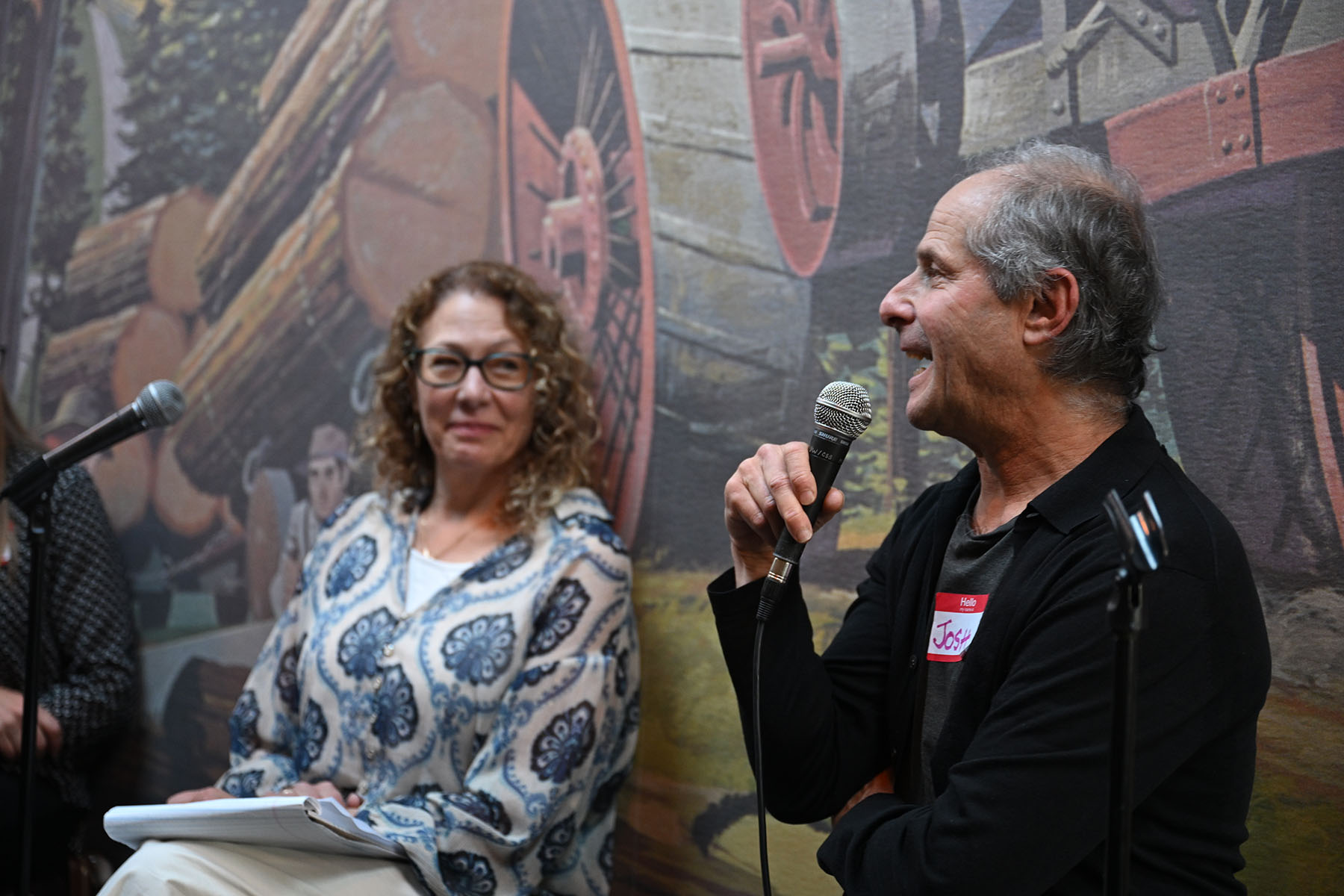
Lisa Hoffman, left, anthropologist and professor in the School of Urban Studies at UW Tacoma, and Josh Tenenberg, right, computer scientist and professor in the School of Engineering & Technology at UW Tacoma. Credit: Matthew Weinstein.
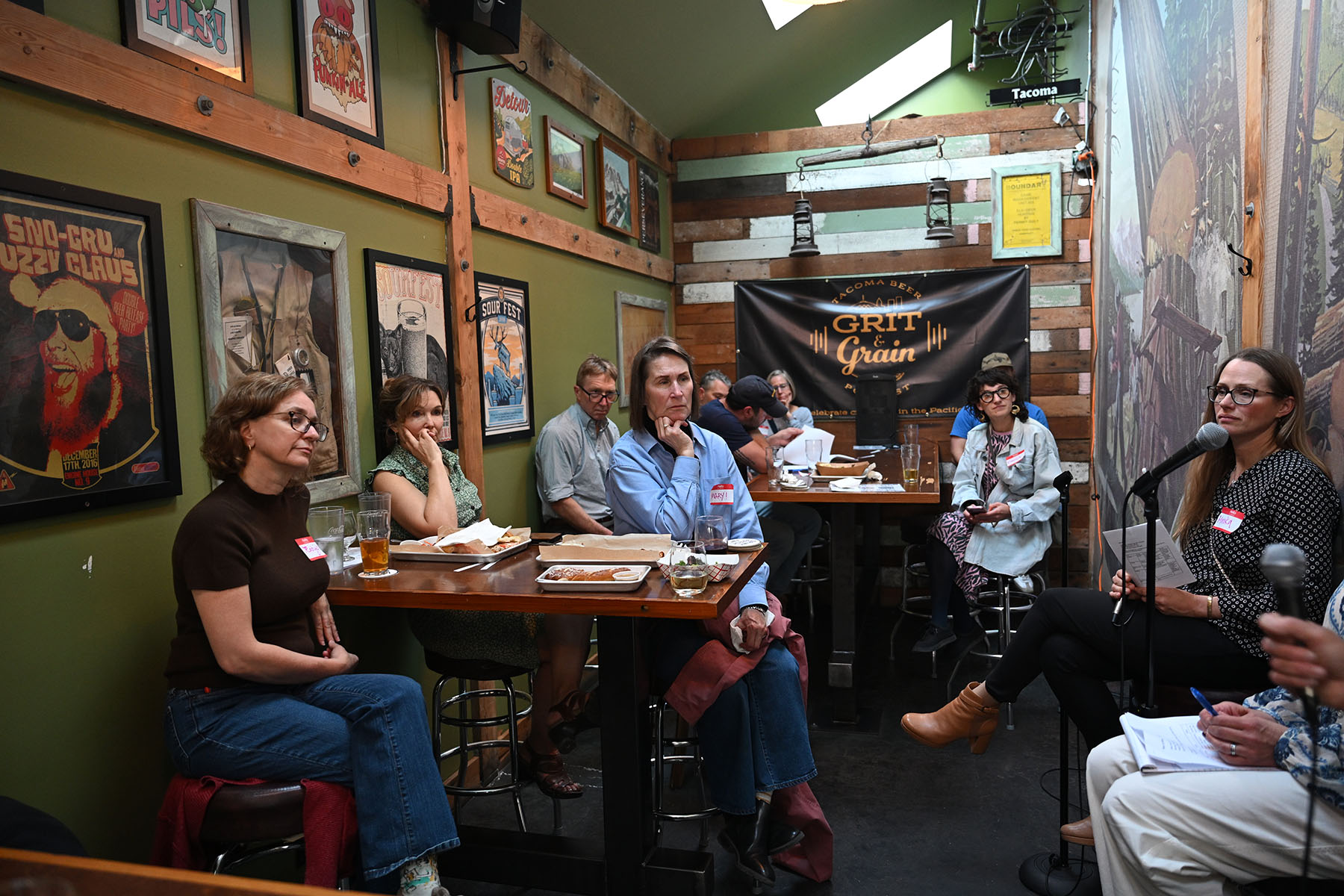
What does it mean to be living with “high risk” for disease? This was the question that inspired an intimate public gathering at Peaks & Pints Taproom in Tacoma on May 18 for Society + Technology at UW’s latest After Hours event featuring anthropologist Lisa M. Hoffman of UW Tacoma’s Urban Studies program and computer scientist Josh D. Tenenberg of UW Tacoma’s School of Engineering & Technology.
Many research collaborations have serendipitous beginnings, and the conversation began with Hoffman and Tenenberg recounting how they’d been attending an STSS reading group led by Matthew Weinstein, a professor of education at UW Tacoma (and the photographer for this event), and realized they shared a connection to pancreatic cancer but had differing relationships to their own sense of identity in relation to risk.
Hoffman (pictured above, left) had been living under the shadow of being high risk for pancreatic cancer after losing both her mother and brother to the disease. While Tenenberg (right) described a different relationship to the same illness. Although his father also died of pancreatic cancer decades earlier, he had never understood himself as someone living with high risk.
When they realized they shared this connection, the scholars began collaborating, conducting cultural and data-driven analyses of risk categories over time.
During the event, they explained the outcomes of their work, such as the regimes of truth that have come to govern approaches to living with risk, alongside their own lived experiences.
Tenenberg revealed that he is reluctant to participate in disease surveillance himself.
“I typically don’t go to the doctor,” he said, adding that he would seek medical attention if he experienced symptoms or believed something was wrong.
His remarks drew laughter from the audience when he clarified that he was not opposed to risk management altogether.
“I’m at higher risk if I go on ladders–and I don’t get up on ladders,” he said. “I don’t go up on my roof.”
Meanwhile, Hoffman described her observations of the trust that vulnerable people are asked to place in medical expertise and predictive technologies. She compared Western medicine’s authority to an oracle or sage—a person in a white coat representing an institution that people may not fully understand but are expected to trust.
At the same time, she acknowledged her own participation in disease surveillance despite concerns about the broader forms of governance they enable. “I take the statin they prescribe,” she said.
More than 25 people enjoyed the private room at Peaks & Pints for the conversation on May 18, 2026. Credit: Matthew Weinstein
Hoffman also noted there’s an expansion of interest among researchers and companies in identifying genetic risk in new populations–such as testing every infant– but noted that families may not understand the meaning of risk. There are ethical concerns about how such knowledge might shape the baby’s life, gesturing to the possibilities that risk categorization opens up, from discrimination to eugenics.
During the question-and-answer session, one audience member, a physician, discussed her elevated risk for strokes due to family history and high blood pressure. Another raised concerns about unequal access to surveillance programs and preventative treatments for people identified as high risk.
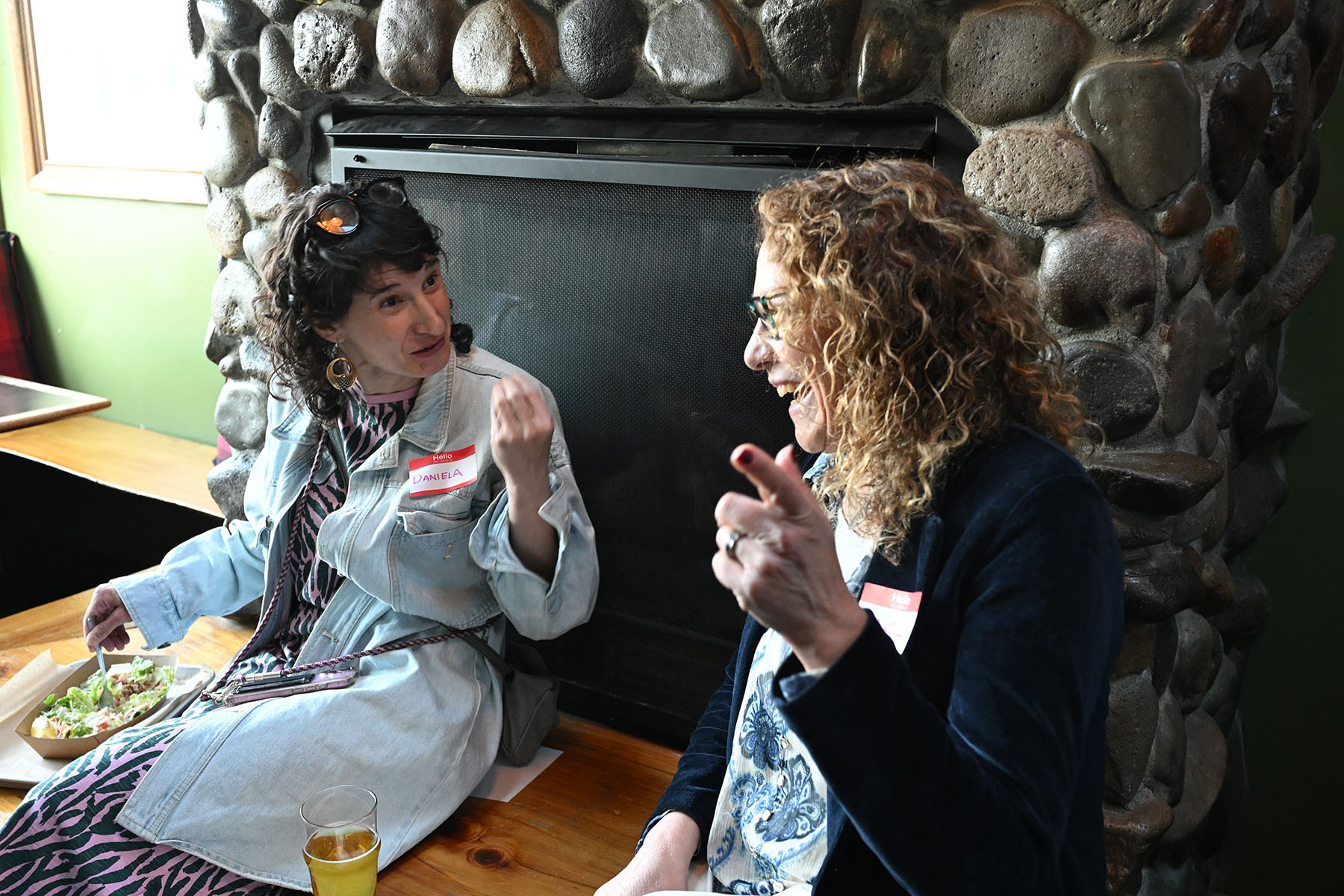
Lisa Hoffman (right) talks with Daniela Rosner (left), professor of Human Centered Design & Engineering and DXARTS at UW Seattle, who traveled to Tacoma for the After Hours event. Credit: Matthew Weinstein
Audience members came from across the Puget Sound region. The After Hours event was made possible thanks to support from the Tech Policy Lab at UW and the in-kind support of Peaks & Pints, which provided the venue space free of charge.
After Hours is a program of Society + Technology at UW, and this session was facilitated by Monika Sengul-Jones.
Society + Technology at UW is dedicated to advancing research on the social, societal, and justice dimensions of technology across the University of Washington’s campuses.
Check out Hoffman and Tenenberg’s upcoming, co-authored publication:
Hoffman, L., Tenenberg, J. (2026). Cancer Risk Assessment Scores: Personalized Risk and Mundane Genomics. In Mundane Genomics: DNA after the Hype. Argudo-Portal, V., Pavone, V., Turrini, M., Wahlberg, A. (Eds.). Preorder link: https://link.springer.com/book/9789819545490
About Lisa Hoffman
Lisa Hoffman is a Professor in the School of Urban Studies at UW Tacoma. An anthropologist, Hoffman’s current research focuses on Seattle’s biotech community, precision medicine, and the shape of contemporary practices of living in relation to genetic risk. Her work offers attunement to place, power, and subjectivity. Previously, Hoffman’s major projects included work on professionals and volunteers in contemporary China.
About Josh D. Tenenberg
Josh D. Tenenberg is a Professor in the Department of Engineering at UW Tacoma. His expertise is in what he calls the “borderlands” of technical and humanistic approaches. Trained in computer science, Tenenberg’s empirical research has been about computing and engineering education, software development, human-computer interaction, design research, semiotics, and technical communication. His publications include Narratives of Qualitative Research: Making Praxis Visible, published by Routledge (2024). He teaches human-oriented aspects of computing at the undergraduate and graduate levels.