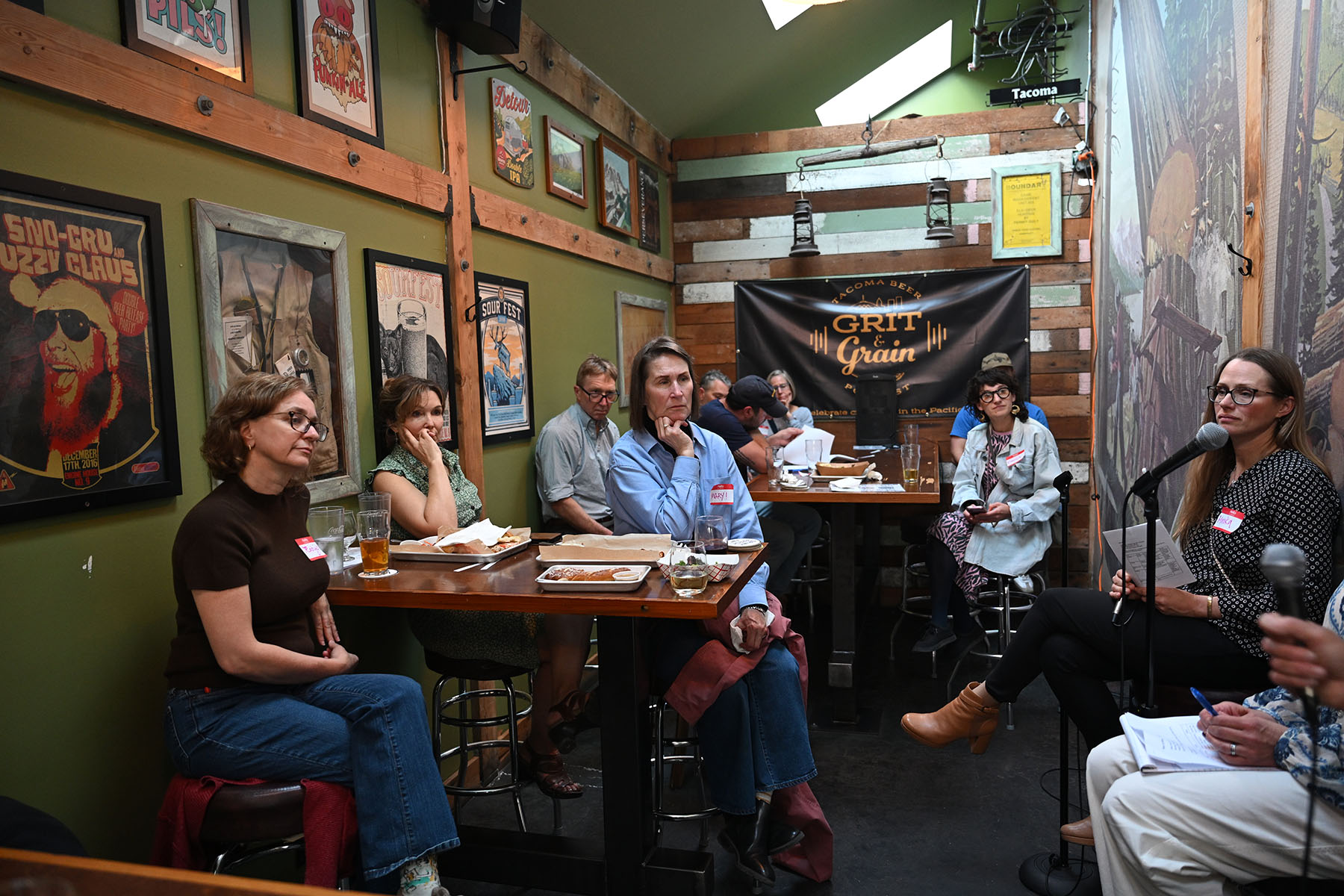
What does it mean to be living with “high risk” for disease? This was the question that inspired an intimate public gathering at Peaks & Pints Taproom in Tacoma on May 18 for Society + Technology at UW’s latest After Hours event featuring anthropologist Lisa M. Hoffman of UW Tacoma’s Urban Studies program and computer scientist Josh D. Tenenberg of UW Tacoma’s School of Engineering & Technology.
Many research collaborations have serendipitous beginnings, and the conversation began with Hoffman and Tenenberg recounting how they’d been attending an STSS reading group led by Matthew Weinstein, a professor of education at UW Tacoma (and the photographer for this event), and realized they shared a connection to pancreatic cancer but had differing relationships to their own sense of identity in relation to risk.
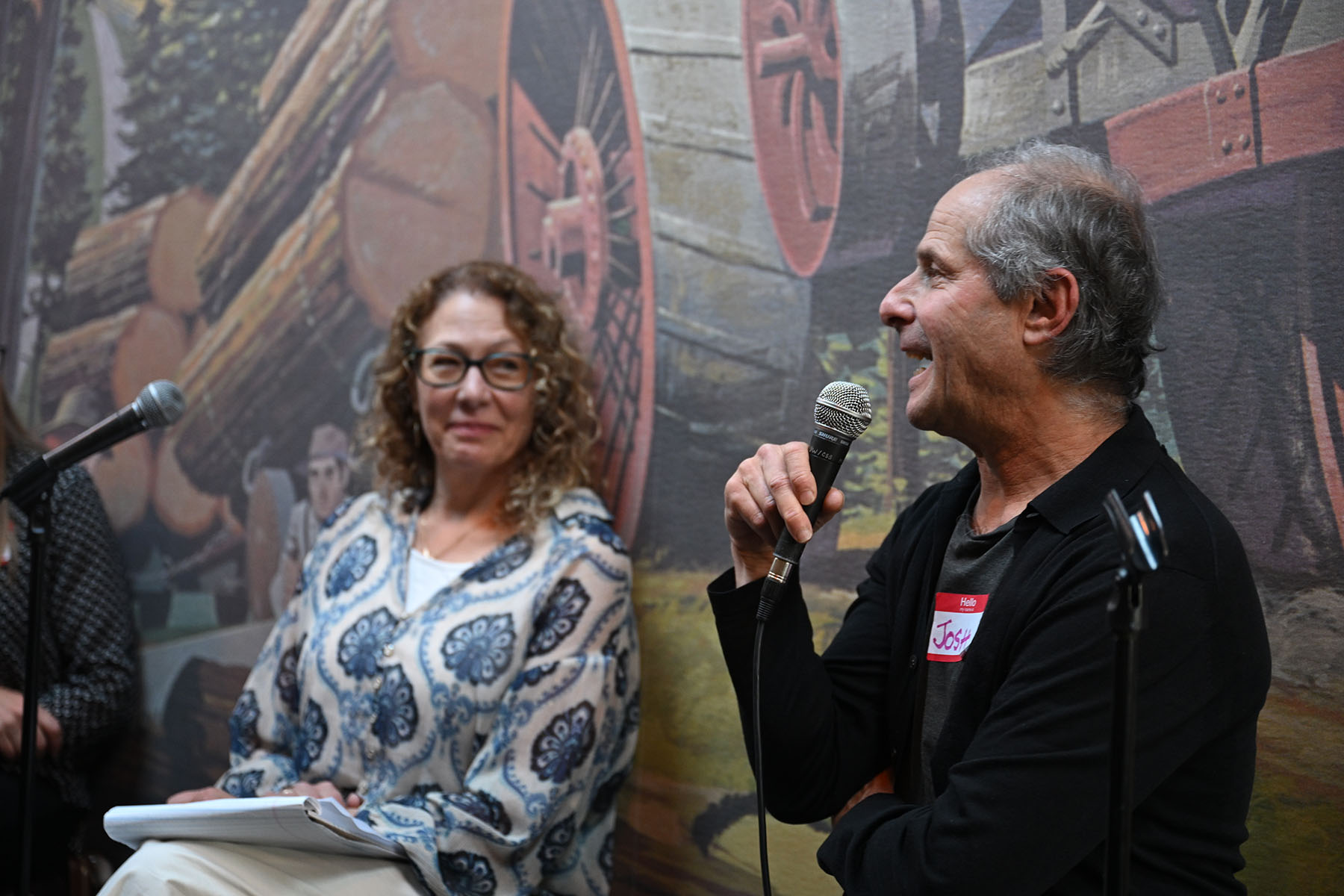
Hoffman (pictured above, left) had been living under the shadow of being high risk for pancreatic cancer after losing both her mother and brother to the disease. While Tenenberg (right) described a different relationship to the same illness. Although his father also died of pancreatic cancer decades earlier, he had never understood himself as someone living with high risk.
When they realized they shared this connection, the scholars began collaborating, conducting cultural and data-driven analyses of risk categories over time.
During the event, they explained the outcomes of their work, such as the regimes of truth that have come to govern approaches to living with risk, alongside their own lived experiences.
Tenenberg revealed that he is reluctant to participate in disease surveillance himself.
“I typically don’t go to the doctor,” he said, adding that he would seek medical attention if he experienced symptoms or believed something was wrong.
His remarks drew laughter from the audience when he clarified that he was not opposed to risk management altogether.
“I’m at higher risk if I go on ladders–and I don’t get up on ladders,” he said. “I don’t go up on my roof.”
Meanwhile, Hoffman described her observations of the trust that vulnerable people are asked to place in medical expertise and predictive technologies. She compared Western medicine’s authority to an oracle or sage—a person in a white coat representing an institution that people may not fully understand but are expected to trust.
At the same time, she acknowledged her own participation in disease surveillance despite concerns about the broader forms of governance they enable. “I take the statin they prescribe,” she said.
Hoffman also noted there’s an expansion of interest among researchers and companies in identifying genetic risk in new populations–such as testing every infant– but noted that families may not understand the meaning of risk. There are ethical concerns about how such knowledge might shape the baby’s life, gesturing to the possibilities that risk categorization opens up, from discrimination to eugenics.
During the question-and-answer session, one audience member, a physician, discussed her elevated risk for strokes due to family history and high blood pressure. Another raised concerns about unequal access to surveillance programs and preventative treatments for people identified as high risk.
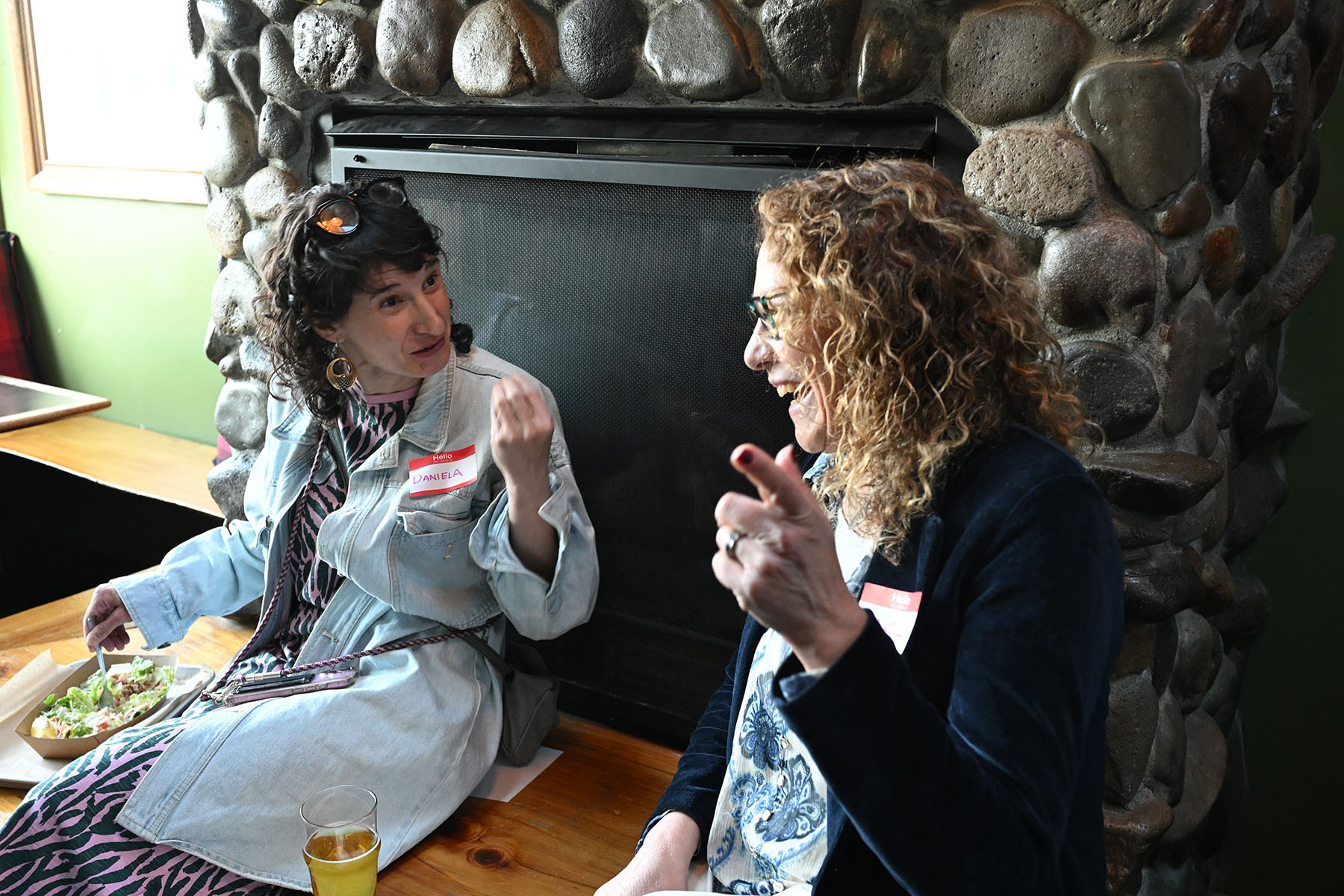
Audience members came from across the Puget Sound region. The After Hours event was made possible thanks to support from the Tech Policy Lab at UW and the in-kind support of Peaks & Pints, which provided the venue space free of charge.
After Hours is a program of Society + Technology at UW, and this session was facilitated by Monika Sengul-Jones.
Society + Technology at UW is dedicated to advancing research on the social, societal, and justice dimensions of technology across the University of Washington’s campuses.
Check out Hoffman and Tenenberg’s upcoming, co-authored publication:
Hoffman, L., Tenenberg, J. (2026). Cancer Risk Assessment Scores: Personalized Risk and Mundane Genomics. In Mundane Genomics: DNA after the Hype. Argudo-Portal, V., Pavone, V., Turrini, M., Wahlberg, A. (Eds.). Preorder link: https://link.springer.com/book/9789819545490
About Lisa Hoffman
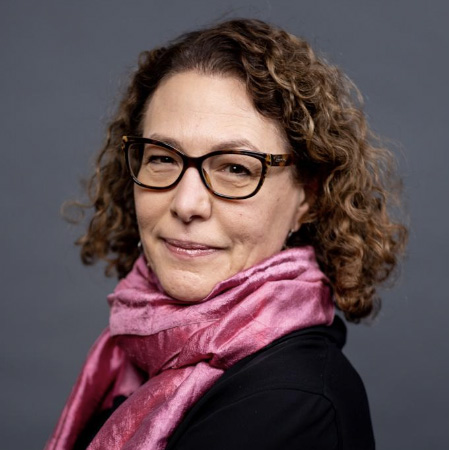
Lisa Hoffman is a Professor in the School of Urban Studies at UW Tacoma. An anthropologist, Hoffman’s current research focuses on Seattle’s biotech community, precision medicine, and the shape of contemporary practices of living in relation to genetic risk. Her work offers attunement to place, power, and subjectivity. Previously, Hoffman’s major projects included work on professionals and volunteers in contemporary China.
About Josh D. Tenenberg

Josh D. Tenenberg is a Professor in the Department of Engineering at UW Tacoma. His expertise is in what he calls the “borderlands” of technical and humanistic approaches. Trained in computer science, Tenenberg’s empirical research has been about computing and engineering education, software development, human-computer interaction, design research, semiotics, and technical communication. His publications include Narratives of Qualitative Research: Making Praxis Visible, published by Routledge (2024). He teaches human-oriented aspects of computing at the undergraduate and graduate levels.