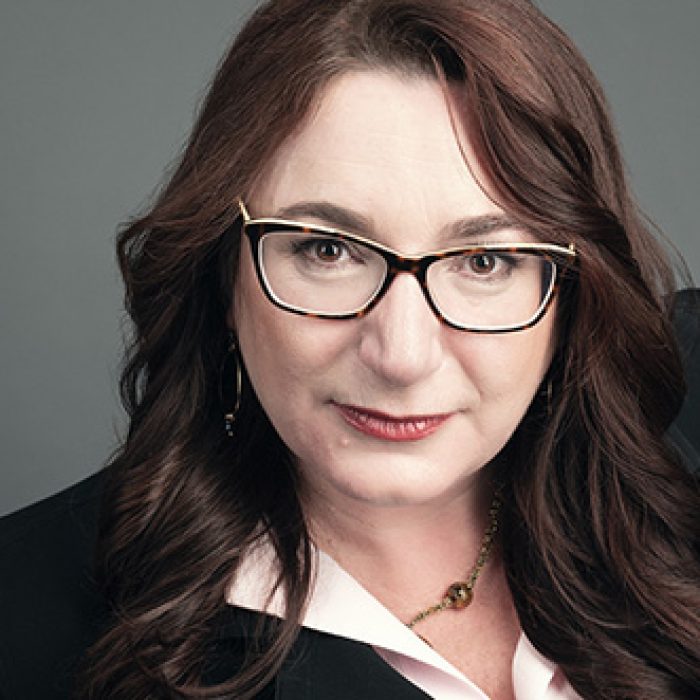
Save the date for January 28, 2027, which will be a public lecture at Seattle’s Town Hall by Cristina Visperas, the Mary Ann and John D. Mangels Endowed Lecturer and guest of the University of Washington Graduate School. Hosted by Society + Technology at UW, the Science, Technology, and Society Studies (STSS) Graduate Certificate Program, and the Department of Communication, this cross-campus event is presented in partnership with American Ethnic Studies, Geography, STS at UW Bothell, and Legal Studies at UW Tacoma.
Additional details, including her lecture title and campus visit details, will be announced this fall.
Every year, the UW Office of Public Lectures accepts nominations for the series. In January, Visperas was nominated by Society + Technology at UW faculty leader and STSS Director Leah Ceccarelli (Communication, UW Seattle) and Director of Strategy & Operations Monika Sengul-Jones, with endorsements from Erin McElroy (Geography, UW Seattle), Linh Thuy Nguyễn (American Ethnic Studies, UW Seattle), and Ilā Ravichandran (Legal Studies, UW Tacoma), and she was selected by the Office of Public Lectures for a 2027 visit.
Visperas is Associate Professor of Communication at the University of Southern California’s Annenberg School for Communication and Journalism. Visperas researches the cultural politics of science and medicine, with a focus on race and state/state-sanctioned violence. Drawing on her science background, she examines how the work of experts can reproduce social hierarchies and, conversely, how they can be mobilized for the ends of justice and social good. Her book, Skin Theory: Visual Culture and the Postwar Prison Laboratory (NYU Press), is an abolitionist study of postwar medical science experiments conducted in U.S. prisons and the emergence of modern American bioethics. Her next project analyzes the complicated relationship between emotion and scientific knowledge in the context of accelerating climate and public health catastrophes. She currently serves on the editorial board of Catalyst: Feminism, Theory, Technoscience and is affiliated with the Center on Science, Technology, and Public Life.
S+T at UW prioritizes programming that advances our mission of fostering cross-campus cross-disciplinary collaborations on the social, societial, and justice aspects of technology; nominating Visperas to visit our campus for a public lecture was suggested independently by several S+T at UW affiliates and thus helps us advance this mission.
This isn’t the first time that S+T at UW has supported an external visitor. Previously, faculty leader Ryan Calo (Law and Information, UW Seattle) and co-director of the Tech Policy Lab, along with Sengul-Jones, endorsed the nomination and supported the visit of Ly Xīnzhèn M. Zhǎngsūn Brown, who was hosted by Jennifer Mankoff (Computer Science, UW Seattle) and CREATE. Brown’s visit also provided the opportunity for a feminist technoscience meet-up with S+T at UW Campus Partner UW Press.
Other scholars that S+T at UW affiliates suggested nominating include cultural theorist and author Catherine Liu (suggested by Agnieszka Jeżyk, Slavic Studies, UW Seattle); Jenny Reardon, the Science and Justice Research Center, University of California, Santa Cruz (suggested by Sebastian Rubiano-Galvis); Beth Coleman, Information, University of Toronto (suggested by Temi Odumosu, Information, UW Seattle); Neda Atanasoski, Gender, Women’s, and Sexuality Studies, University of Maryland (suggested by Erin McElroy, Geography, UW Seattle, and Nassim Parvin, Information, UW Seattle); and danah boyd, Communication, Cornell University (suggested by Ryan Calo, Law and Information, UW Seattle).
Society + Technology at UW is pleased to invite the public to The Power of Public Research, our 2026 fall symposium highlighting University of Washington research and teaching at the intersection of society and technology.
Date: Friday, October 2, 2026 Time: 4:00 PM to 8:00 PM Location: Burke Museum, Cascade Room, 4303 Memorial Way NE, Seattle, WA, 98195
We believe public research and teaching have their greatest impact when they foster greater understanding and empathy. Society + Technology at UW’s symposium is designed with this mission in mind.
The program will feature opening remarks from Andrew Connelly, Associate Vice Provost for Data Science in the UW Office of Research and Professor of Astronomy, alongside threaded presentations, birds-of-a-feather discussions, and a fireside chat all featuring Society + Technology at UW affiliates.
This event is free and open to the public, but space is limited. Register today to receive updates about speakers and the full symposium program.
Schwabe is a Pacific Northwest law firm that offers an exceptional client experience based on a deep industry focus through the lens of our clients, colleagues, and communities. We provide a wide range of legal services through comprehensive, proactive advice, helping them achieve their objectives with strategy and care. With over 160 attorneys, Schwabe is one of the largest regional law firms in the Pacific Northwest, with offices in Portland, Bend, and Salem, Oregon; Seattle and Vancouver, Washington; Mountain View, California; and Anchorage, Alaska.
AI@UW envisions a future where AI at the University of Washington is a global model for innovation, diversity and societal impact — bridging disciplines and inspiring responsible applications of AI to address complex challenges. Our goal is to lead the way in advancing ethical, interdisciplinary AI research while fostering practical innovation to benefit society at large.
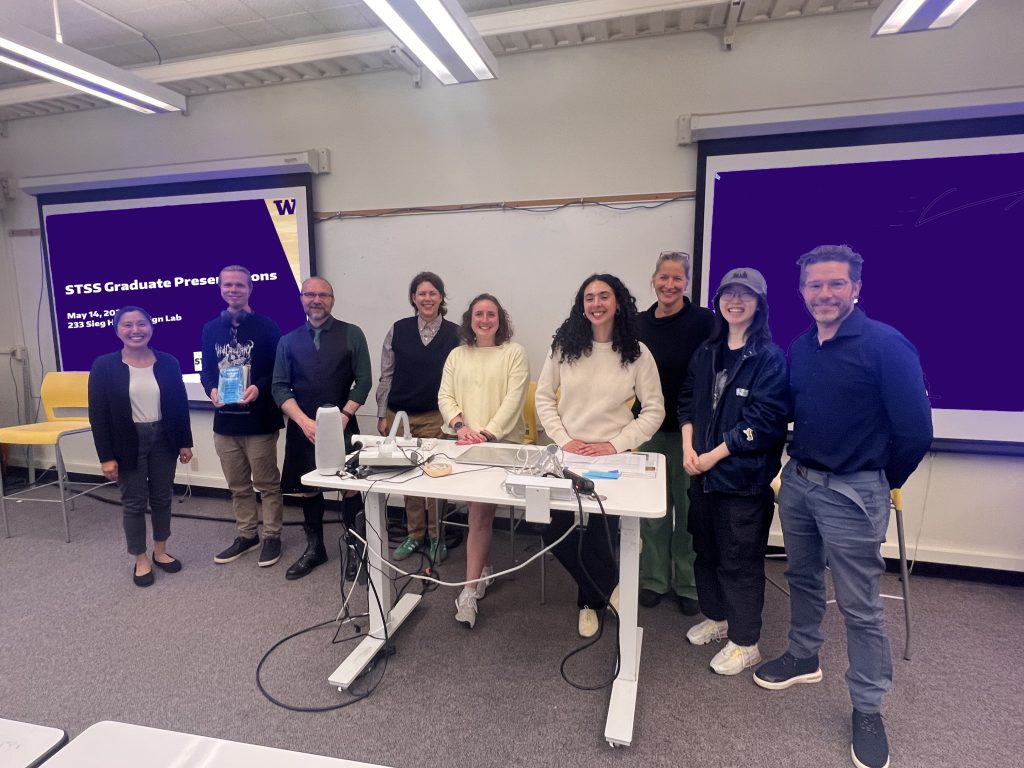
The 2026 STSS graduate certificate program presenters and their STSS advisors. Not pictured: Daniela Rosner.
Ontological choreography. Paradigm shifts. Boundary-work. Infrastructure as media. Value capture. Philosopher-in-residence.
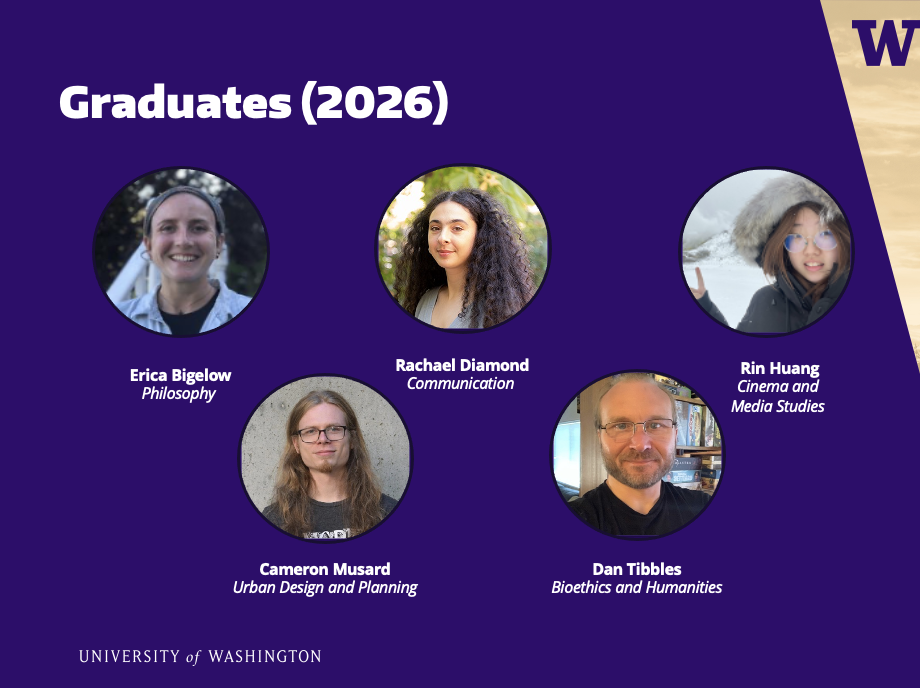
These are a few of the thematic keywords and phrases referenced during the portfolio presentations on May 14, 2026, by the five graduates of the Science, Technology, and Society Studies (STSS) graduate certificate program: Erica Bigelow, Rachael Diamond, Rin Huang, Cameron Musard, and Dan Tibbles.
The purpose of the STSS portfolio is for students to showcase how their research and teaching activities connect to the certificate’s learning objectives, which include learning to contextualize STEM fields in their social, historical, ethical, and policy contexts and building the critical reasoning skills needed to address complex problems at the intersection of science, technology, and society. The presentations are also a chance for graduates to connect their STSS learning to their own professional goals.
In the words of Tibbles, who is in the MA program in Bioethics and Humanities in the School of Medicine, the interdisciplinary ethos of STSS is shifting from seeking to understand to asking, “What systems made this look natural, responsible, funny, objective, or inevitable?” he said during his presentation, “Zooming Out.”
During his time in STSS, Tibbles brought his work in game design to bear on research about epigenetic gene editing.
Huang, an MA student in Cinema and Media Studies, described how STSS led her to consider space, technologies, and geography in her research on visions of the future in aviation.
Musard, who studied at Seattle Central’s Wood Technology Center and is now completing an MA in Urban Planning, described his engagement with STSS as demarcating tensions between carpentry and related professional categories such as architecture, construction labor, and woodworking through economic history, philosophy of education, and planning theory.
Bigelow, a doctoral candidate in philosophy, studied the ethics of large language models in clinical settings and broadened her reach as a philosopher-in-residence at Rainier Beach High School in Seattle.
Diamond, a communication scholar who will begin a PhD program at Northwestern in the fall, gestured to her work in climate activism as spurring her curiosity about STSS. Through her courses, she began to research the conditions under which people trust science.
The graduates come from five disciplines—philosophy, communication, cinema and media studies, urban design and planning, and bioethics and humanities—demonstrating the intellectual reach of STSS.
Outgoing steering committee member Matthew Weinstein (Education, UW Tacoma) and interim STSS director David Ribes (Human Centered Design and Engineering, UW Seattle) introduced and facilitated the event.
STSS became an official UW Graduate School certificate in 2015. This year’s cohort brings the total number of certificate graduates to 21.
Congratulations to the graduates and their STSS advisors!
Student Presenters
Dan Tibbles Bioethics and Humanities
Advisor: Sara Goering (Philosophy) Presentation:Zooming Out
Dan Tibbles is a graduate student in Bioethics & Humanities, Genetic Epidemiology, and Education, Equity, & Society at the University of Washington. His work sits at the intersection of bioethics, public health genetics, and science and technology studies, focusing on how institutional incentives, interpretive practices, and data infrastructures shape what biotechnologies become clinically available, how they are communicated, and whom they serve. Prior to academia, he spent two decades in the tabletop game industry as a designer, manager, and business owner, a background that informs his systems-oriented approach to ethics, infrastructure, and human choice.
Rachael Diamond Communication
Advisor: Carole Lee (Philosophy) Presentation:Science/Society Communication in a Warming World
Rachael Diamond is a second-year graduate student in the Department of Communication whose master’s thesis research examines climate science communication and the rhetoric of environmental activists. After earning her MA, she will start her PhD in philosophy at Northwestern University in the fall. Before coming to UW, she was a political organizer advocating for pro-climate policies and candidates, and studied philosophy at Scripps College.
Erica Bigelow Philosophy
Advisor: Amanda Friz (Communication) Presentation:Meeting and Making the Tech-Built World
Erica Bigelow is a PhD candidate in the Department of Philosophy whose dissertation studies the nature and extent of our moral obligations toward others’ emotions. She is a scholar of critical disability studies and is particularly interested in how online discourse shapes and interprets such obligations, and in rethinking feminist moral theories to meet the present moment.
Cameron Musard, who studied Cabinetmaking and Architectural Millwork at Seattle Central College’s Wood Technology Center and is completing an MA in Urban Design and Planning, described his engagements with Science, Technology, and Society Studies (STSS) as demarcating Traditional Carpentry from related professions such as construction management, real estate development, architectural design, landscape and urban design, engineering, and civic leadership. Drawing on traditions in the philosophy of science, economic history, philosophy of education, and the sociology of knowledge, his work examines how distinct forms of expertise, craft knowledge, and professional authority are produced, transmitted, and institutionalized within the built environment.
Rin Huang is a graduate student in Cinema and Media Studies, focusing on transportation and its media representations. They wonder how technologies, especially those related with aviation and aeromobility, create a dispersed imagination of globalization and modernization since 1920s.
Advisors
Sara Goering Philosophy (UW Seattle)
Sara Goering is Professor of Philosophy and the Program on Ethics, and has affiliations with the Department of Bioethics and Humanities, and the Disability Studies Program. In addition, she currently leads the ethics thrust at the UW Center for Neurotechnology. She teaches courses in bioethics, ethics, philosophy of disability, feminist philosophy, and philosophy of medicine. She also spends time discussing philosophy with children in the Seattle public schools, through her role as the Program Director for the UW Center for Philosophy of Children.
Carole J. Lee Philosophy (UW Seattle)
Carole J. Lee is Professor in the Department of Philosophy at the University of Washington, an Adjunct Professor at the Information School (iSchool), and Affiliate Faculty at the Center for an Informed Public, Center for Statistics and the Social Sciences, eScience Institute, Center for Studies in Demography and Ecology, and the Society + Technology Program. She studies the social structure of science from both normative and descriptive perspectives.
Amanda Friz Communication (UW Seattle)
Dr. Friz is Assistant Professor of Rhetoric of Health and Medicine in the Department of Communication and an Associate Director of the Center for Communication, Difference, and Equity and its Heal Equity Action Lab. She is currently writing her first book, A New Materialist Critique for a Radical Politics of Pleasure, which proposes shifting the locus of feminist pleasure activism from liberal subjectivity toward a radically inclusive plurality as the basis for more equitable sexual relationships.
Daniela Rosner Human Centered Design & Engineering, DXARTS (UW Seattle)
Daniela Rosner is Professor of Digital Arts and Experimental Media (DXArts) and Human Centered Design and Engineering (HCDE) at the University of Washington, where she serves as Associate Chair of External Affairs. She holds adjunct appointments in the Department of Gender, Women, and Sexuality Studies (GWSS) and the Allen School for Computer Science and Engineering (CSE). She also serves as an associate member of the Einstein Center for Digital Futures in Berlin, Germany.
David Ribes Human Centered Design & Engineering (UW Seattle)
David Ribes is a Professor in the Department of Human Centered Design & Engineering at the University of Washington. Dr. Ribes’s research focuses on the sociotechnical facets of eScience and how research infrastructures can support scientific investigations across changes in technology, policy and social organization.
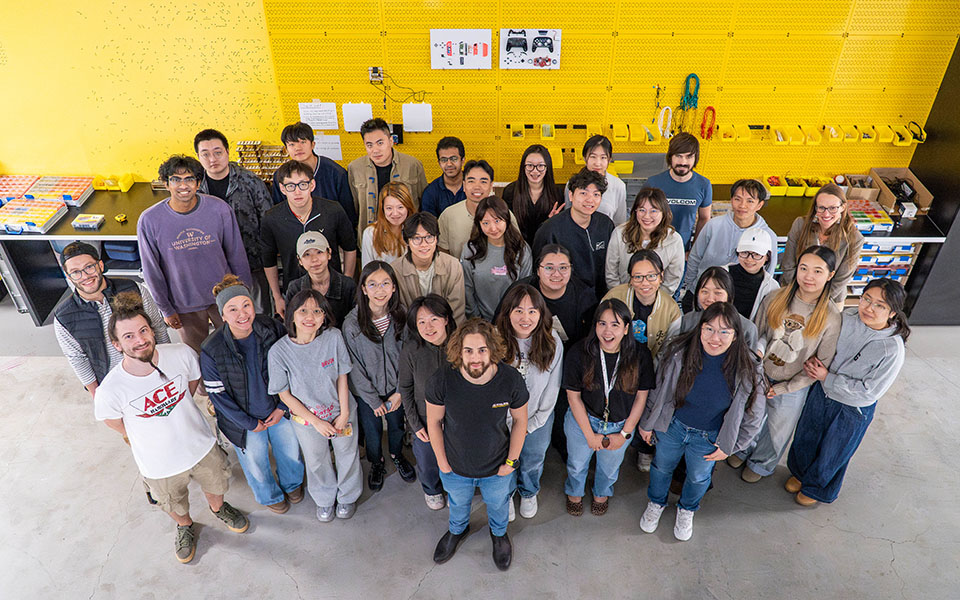
Students in the 2026 MSTI responsible innovation course with Monika Sengul-Jones. Credit: Justin Horne
The second year of the S+T at UW and GIX partnership, the Master of Science in Technology Innovation (MSTI) course on responsible innovation, concluded for the 2026 spring quarter with presentations by students reenvisioning an established product in connected devices and robotics, including satellites, robotic arms, and augmented reality glasses, to better align the product with social values such as reducing harm, privacy, transparency, and security.
The course capstone emerged after students grappled with topics such as tech policy, data privacy, intention, emotion, communication, and security through readings, films, engagement activities, and guest lectures by four experts from the UW (bios below):
Jessica L. Beyer, Assistant Teaching Professor of International Studies (UW Seattle) on information sharing and cybersecurity.
Alex Bolton, Executive Director of the Teach Policy Lab (UW Seattle), who presented on technology policy and definitions of technology.
Agnieszka Jeżyk, Maria Kott Endowed Assistant Professor of Polish Studies in Slavic Studies, on technology anxiety.
Beth Kolko, Professor of Human Centered Design and Engineering Professor on responsible innovation and tech design.
In their reflections on the course, students said they not only appreciated the range of disciplinary expertise of the speakers but the unique engagement materials — which included fiction, films, panel events, historical case studies, games, news articles, and podcasts — all aimed to guide students to unexpected angles from which to consider responsibility and innovative design.
For instance, student Yewen Zhou noted that Jeżyk’s background in Polish studies, avant-garde literature, psychoanalysis, and Cold War material culture gave her a perspective on technology grounded in affect and lived experience that she hadn’t expected — but deeply appreciated.
“[Jeżyk’s] approach opened up questions about how people feel about technology, not just what technology does to them. That session was one of the most memorable parts of the course for me, partly because of the thoughtful inclusion of Ray Bradbury’s “There Will Come Soft Rains” (both the 1950 short story and the Soviet film from 1984) in the course material. It was such an impactful lead-up to the discussion — and having one of the questions I wrote on sticky notes answered during that class made the session feel perfectly integrated into my learning experience.”
Generally, assignments and in-class activities used multimodal techniques to encourage dialogue, reflection, and problem-solving around technological catastrophes and worst-case scenarios.
“I liked the day that we used an anonymous pad to write about bias in data science as a class collective,” wrote one in a final reflection, noting that people could write more freely than in open class discussions.
Another nontraditional assignment, “Walking with Her,” paired students to record a guided discussion of Spike Jonze’s 2013 film Her, in lieu of a traditional written response paper, prompting students to openly discuss intimacy, dating, artificial intelligence, and technological dependence with less stress.
“Responsible innovation can’t only live in policy documents and risk matrices, it also has to reckon with the cultural imagination and emotional reality around technology.”
Yewen Zhou, GIX Student
Students also maintained a 30-hour technology log to foster their own reflection of their technological habits and daily interactions with sociotechnical systems.
To prepare for security challenges, students used a “White Hat Hacking” red-teaming card deck developed by Tech Policy Lab co-founder Tadayoshi Kohno to help them think like adversaries so they could propose stronger, more resilient redesigns for their final projects.
A common theme crosscut the final presentations: engagement with the Responsible Innovation Labs toolkit, authored by Kolko, which helps early-stage founders anticipate how products and services can have an impact that goes beyond the intended users.
“Responsible innovation can’t only live in policy documents and risk matrices,” said Zhou, “it also has to reckon with the cultural imagination and emotional reality around technology.”
This is the second year of collaboration that brings affiliated scholars from across the UW community into a lecture series program for the course, The History and Future of Technology: Responsible Innovation.
Guest Speakers
(Alphabetical Order)
Jessica L. Beyer
Topic: Information Sharing and Cybersecurity Jessica L. Beyer is an Assistant Teaching Professor in the Henry M. Jackson School of International Studies at UW Seattle and a leader of the school’s Cybersecurity Initiative. Her award-winning research examines international technology politics, online communities, and dis/misinformation, including projects on COVID-19 information flows and Internet of Things security. She is an expert in the politics of cybersecurity and mentors student research across multiple programs. Her work has been supported by the National Science Foundation, the Carnegie Corporation of New York, and the UW Population Health Initiative. Jessica is the author of Expect Us: Online Communities and Political Mobilization (Oxford University Press, 2014).
Alex Bolton
Topic: Tech Policy Alex Bolton is Executive Director of the Tech Policy Lab at UW Seattle and a 2025-26 Non-Resident Research Fellow with the Siegel Family Endowment. The Tech Policy Lab is an interdisciplinary collaboration crossing the School of Law, the Information School, and the Paul G. Allen School of Computer Science & Engineering. Alex leads the strategy and programming, convenes campus-wide discussions on technology policy, and co-teaches courses on technology law, policy, and ethics. He is also a founding member of the Public Tech Leadership Collaborative Steering Committee, a program of Data & Society. Alex previously worked in state government and higher education, including for former Washington Governor and U.S. Senator Daniel J. Evans. He holds a J.D., M.P.A., and B.A. from the University of Washington.
Agnieszka Jeżyk
Topic: Tech Anxiety Agnieszka Jeżyk is the Maria Kott Endowed Assistant Professor of Polish Studies in the Department of Slavic Languages and Literatures at UW Seattle. Her research focuses on marginal subjectivities, avant-garde literature, and representations of technology in Central and Eastern Europe, with an emphasis on psychoanalysis, horror, and material culture in the Cold War period. She has held academic positions at the University of California, Los Angeles and the University of Toronto. Her work connects literary and cultural analysis to broader questions about technology, affect, and modernity.
Beth Kolko
Topic: Responsible and Creative Innovation Beth Kolko is a Professor in the Department of Human Centered Design & Engineering at UW Seattle. Her work focuses on human-centered entrepreneurship and the role of design in shaping more equitable forms of innovation. She leads initiatives such as REgroup, which brings together students, founders, and investors to rethink entrepreneurship, and previously directed labs focused on digital inclusion and technology design. Kolko is also co-founder and former CEO of Shift Labs, a company developing low-cost medical devices for emerging markets. Her career crosses academia, industry, and global consulting, with experience at Microsoft Research, the Berkman Klein Center at Harvard, and organizations in multiple countries.